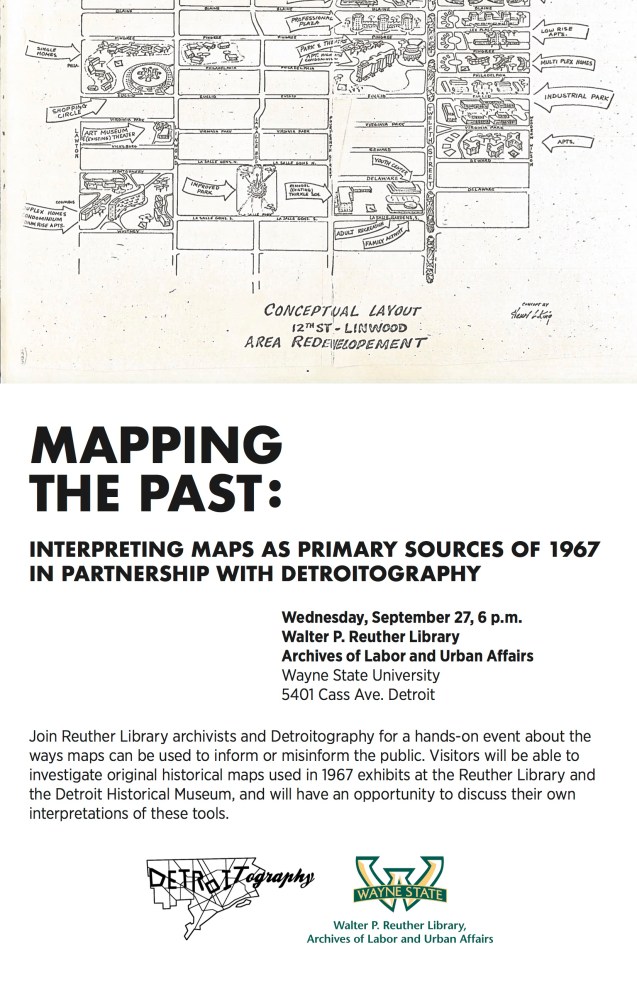
Event: Mapping the Past – Interpreting Detroit Maps from 1967

Mapping_the_Past_11x17__1_

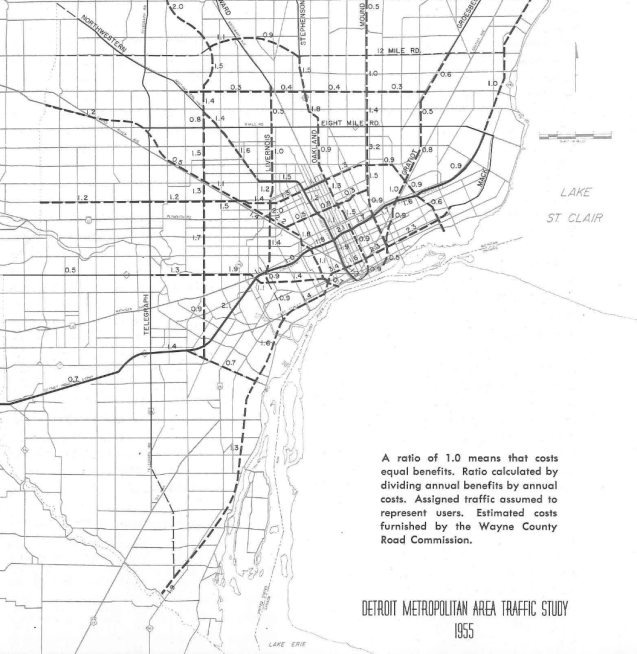
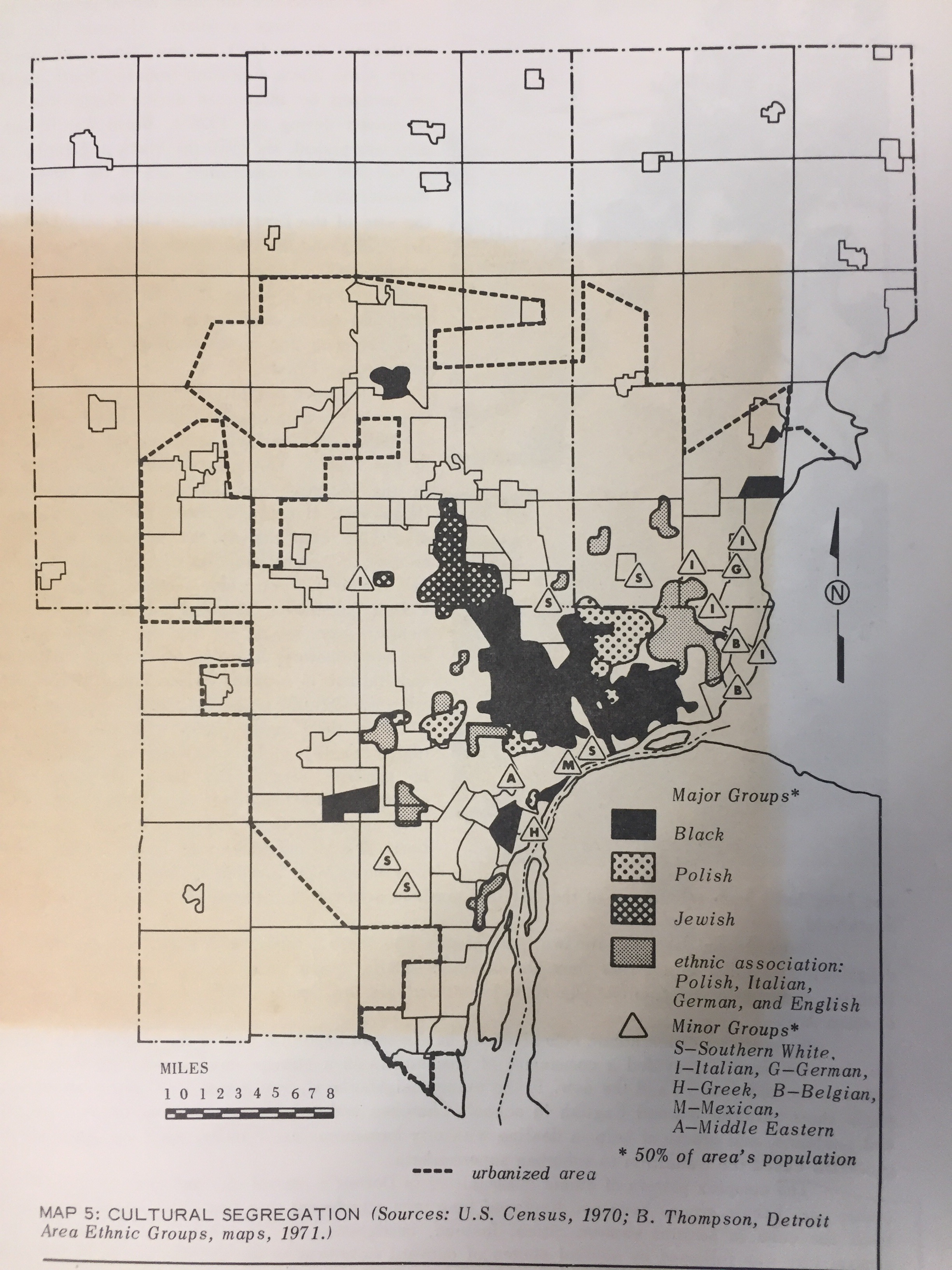
Join staff from the Reuther and DETROITography on September 27 at 6pm for a hands-on event exploring the ways maps can be used to inform or misinform. Visitors will have a chance to work with original maps related to Detroit’s 1967 Uprising that have been used in exhibits at the Reuther, Detroit Historical, and in films such as Kathryn Bigelow’s “Detroit.”

Map: Uneven Subsidies for Development in Detroit 2015

Subsidy and mission_Urban Institute_Mission Figure 5-01_i

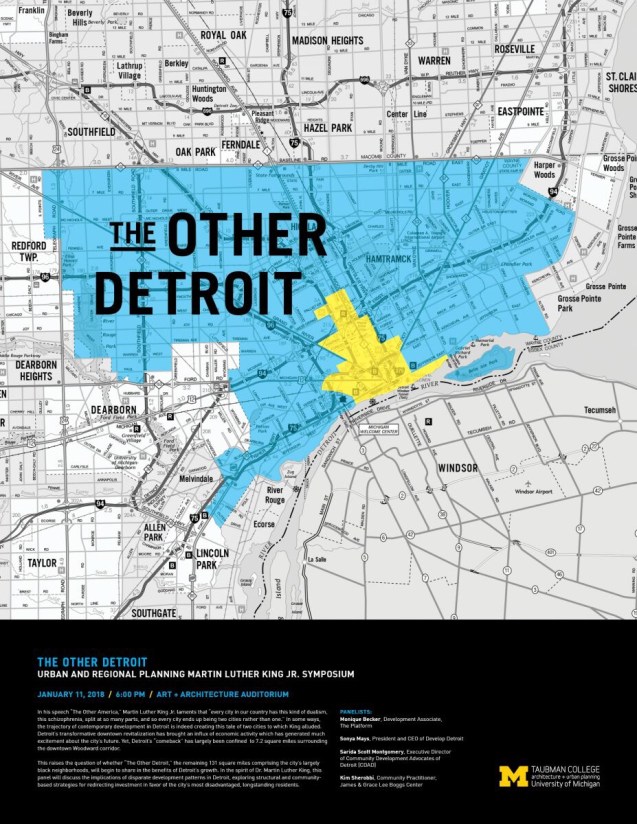
The Urban Institute’s recent report highlights the uneven investment and development in Detroit. The report found that tax subsidies disproportionately favor downtown and Midtown, which received 57 percent of state, federal and local tax subsidy investments from 2013 to 2015.

“This combination of growth downtown and more limited investment in outer neighborhoods … can make Detroit appear to be a ‘tale of two cities'”

Workshop: Data, Mapping, and Research Justice

coopen_banner_data-300x300

It’s that time again. I’ll be teaching my workshop on data and mapping again this October 2017 with Allied Media Projects/ Co.Open.

During the 4-week course we will journey through the entire mapping process; from paper survey to digital database, basic map visualizations, and finally analysis. We will be working with free and open source software (LibreOffice, QGIS, Inkscape, etc.).

Check out some of the past course projects:

Thursday nights in October (4 weeks long) 6-9pm

October 12th – November 2nd

Sign up! HERE

Map: Stereotype Your Detroit Neighborhood

Screen Shot 2017-09-11 at 7.13.47 AM.png

Launched in July, Hoodmaps crowdsources categories for more than 200 cities. The project comes from a common problem for city lovers. As the creator Pieter Levels says:

“I very often end up in the tourist center. I’m originally from Amsterdam and I know 90% of tourists will never get any idea about the ‘real’ Amsterdam because they just stay in the tourist center.”

However, Martín Echenique at CityLab notes the dangers of a crowdsourced project to categorize neighborhoods based on past app projects that have become tools for racism (i.e. SketchFactor, Airbnb, NextDoor, etc.).

The categories users can choose from are also quite limited, not to mention white-centric. The stereotypes speak mostly to how wealthier, white people might see a neighborhood—the ”hipster” label is especially common in lower-income and more diverse parts of cities, while “normies” is so vague that it’s nearly useless for understanding anything about an area.

It appears so-far that 50 people have contributed to color-coding and tagging Detroit neighborhoods. Could this be a useful app, an exercise in futility, or another tool for coded racial prejudice.

Map: Basketball Hoops per capita for Children in Detroit 2017

hoops-per-child

Basketball is the most popular sport by far in Southeast Michigan according to the “State of Play” report by the Ralph C. Wilson Jr. Foundation. A friend asked me last month if there was any data on all the basketball courts in the city. I knew that the parks kept track of amenities, but that wouldn’t capture all the available courts and hoops in the city that might be located at schools, churches, etc.

I embarked on the joyous adventure of combing Detroit from the skies via Google’s Satellite Imagery and a grid of the city. Basketball courts, it turns out, are fairly easy to spot because of the size of paved space needed, the signature painted lines, and the shadow of basketball poles. Surprisingly, many schools do not have outdoor basketball amenities and many churches have partial courts in their parking lots.

This was in no way a vetted and comprehensive analysis because likely I missed numerous courts and hoops. I specifically didn’t count hoops that were set up on residential streets and indoor courts were also not assessed. Similar to the access to park acres, there are many areas of the city with a high number of children and a lack of basketball hoops. Indoor hoops may make up the difference, but those may take longer to identify and assess.

Hand Maps Provide Reference for Detroit Geography

IMG_5100

Detroit is a big city with a deep history and so many old and new things happening all the time that it can be near impossible to give anyone a “brief” introduction to the city.

If you’ve ever talked with me, you know that I always start with a hand map. I find it gives people a quick relatable reference. People know more than they think and when they can place the Fisher Building related to Belle Isle they are on track.

The funny part of the hand map is that it focuses geography within Grand Boulevard. Most people try to use their whole hand to represent Downtown and Midtown. This becomes another helpful reference lesson that there is so much more beyond the hip core of Detroit.

These hand maps come from an introductory session with the Detroit Fellows from Humanity in Action.

IMG_5093

IMG_5099

IMG_5091

IMG_5089

Map: Creative and Cultural Industries in Detroit 2012

Screen Shot 2017-08-28 at 8.38.41 AM

This map created by Data Driven Detroit and Miller Dickinson Blais accompanied a Kresge Foundation report called “Creative Vitality in Detroit: The Detroit Cultural Mapping Project.”

There are likely many small spaces and organizations that have come and gone since 2012, but I would assume that the distribution and density has remained the same.

Map: Pharmacies are Detroit’s Closest Retail Amenity

Detroit-Pharmacy-Map

In the March 2017 report, “Going the Distance: Big Data on Resident Access to Everyday Goods” the J.P. Morgan Chase Institute identified pharmacies as leading accessibility point for Detroit residents. The report compared data for both New York City and Detroit and found that in both cities the majority of residents shopped for retail goods outside of their 20-min neighborhood area.

Pharmacies came in at #1 with an average distance of 0.9 miles away with grocery stores a close #2 at 1.4 miles on average. The analysis was run with ZIP code filling in for neighborhood and ZIP code centroid being used to calculate distance which causes some issues when trying measuring distance of residents to retailers. The analysis was limited by ZIP code due to use of a credit/debit transaction database that only geotags ZIP code.

Map: Klan Support in Detroit Mayoral Election 1924

Screen Shot 2017-08-23 at 8.32.38 AM

This map was created by Donald Deskins Jr. as part of his PhD dissertation on “Residential Mobility of Negro Occupational Groups in Detroit 1837-1965” at the University of Michigan in 1971.

He wrote:

“Immediately following World War I, Klan membership in Detroit numbered in the thousands. […] Claiming a 200,000 local membership, this group was very active during this period. So active in fact that the Klan-supported write-in candidate would have become mayor of Detroit in 1924, had it not been for 17,263 ballots which were declared invalid due to misspelling, etc.

Figure 5.2 portraying the areas in Detroit where Klan support was strong, makes it apparent that the Klan support was almost ubiquitous except in ethnic areas on the east side and in the Negro community. Strongest Klan support was located between the city’s two major Negro enclaves in the triangular area defined by Grand River, Philadelphia and the John C. Lodge Expressway.

Map: Detroit and the 2017 Solar Eclipse

detroit-eclipse-17

Detroit is not in the “path of totality” that will see the moon 100% obscure the sun, but we will be in a prime location to experience 80% obscurity.

As far as I can find there is only one event in Detroit to see the solar eclipse. The Michigan Science Center will be open from 12:00PM to 5:00PM. They note that the eclipse will happen between 1:03PM and 3:47PM with 2:27PM being the best time to see the most of the eclipse.

DO NOT LOOK DIRECTLY AT THE SUN!

EVER!

NOT EVEN DURING THE ECLIPSE. DO NOT TRY TO VIEW THE ECLIPSE THROUGH A CAMERA OR CELLPHONE.

Map: Detroit’s Pet Service Desert

aa-so16-detroit-map-800

Yet another layer to the “food desert” metaphor has been added by new efforts from the Humane Society called “Pets for Life.”

Through Pets for Life, The HSUS has led the charge to make pet care services more accessible, preserving the bond between families and their companions and flipping that statistic on its head. Around 80 percent of PFL clients with unaltered pets end up getting the surgery done through PFL.


Map: Infant Deaths in Detroit 1939 – 1940

Screen Shot 2017-07-27 at 7.45.20 AM.png

Infant mortality has been a primary health focus area for a very long time in Detroit and across the country as it is an important marker for the overall health of a place. This map from the Detroit City Plan Commission’s report titled: “The People of Detroit.” The legend creates even categories for the data, but you can still see a higher concentration in the city’s central core near Downtown within the ring of Grand Boulevard.


Map your own Detroit Bike Route

img_1919

MOCAD and Back Alley Bikes have partnered to host a youth “earn-a-bike” workshop August 21-25 this summer.

For their flyer to promote the program they’ve included this excellent map of Detroit that includes no expressways so that you can plan your bike route along the dashed road lines.

More hand drawn maps please!

Map: Detroit Riot Crimes 2009 – 2016

riot-crimes-2009-2014 copy.png

This map includes all criminal incidents that are coded by the police as “riot” which in most cases involve “disorderly conduct” and interfering with a police officer or fire personnel. Since 2009, there have been 323 riot crimes, but only 11 of those were for “inciting a riot.”

Urging or instigating other persons to riot, but shall not be deemed to mean the mere oral or written (1) advocacy of ideas or (2) expression of belief, not involving advocacy of any act or acts of violence or assertion of the rightness of, or the right to commit, any such act or acts.” 18 USC

Detroit has a long history of civil disturbances with the first such incident recorded in 1783, Chief Pontiac’s Rebellion. Racially charged incidents followed in 1833 with the freeing of the Blackburns who were being held as “fugitive slaves” and in 1850, recorded as the Abolitionist Uprising, which required three militia units to quell. The 1863 Faulkner Riots were the first race riots fueled by misinformation and racial hate. The result of the Faulkner Riots was the creation of Detroit’s first police force. Other well-known “riots” have been instigated by White mobs in 1925 at the home of Ossian Sweet, in 1942 at the Sojourner Truth Housing site, and the 1943 Belle Isle Race Riots.

The 1966 Kercheval Mini-Riot was a precursor to the 5-day 1967 Rebellion. As many have noted, never had Detroit’s civil disturbances required the calling up of federal troops as paratroopers took to the city streets. The end was not 1967, tensions remained high and have continued. In 1975, Mayor Coleman Young attempted to calm crowds after a White bar owner shot an unarmed Black teenager in the Livernois-Fenkell Riots.


Map: Detroit’s Precinct 4 Patrolman’s Beat Map 1918

Screen Shot 2017-07-27 at 7.20.49 AM.png

This example beat map is included in the 1918 Annual Report of the Detroit Police Department.

“Beat Maps: Each patrolman is furnished with a map of his beat upon which is designated all public buildings, all factories, and other important risks, so that he may intelligently patrol his beat.”

Event: Detroit Home Movies and Hand Maps at the DIA

HIA-handmap-workshop

In collaboration with Humanity in Action’s Detroit Fellows and the Detroit Institute of Arts, we will be creating and collecting hand maps during the “Detroit Home Movie” showings.

Come find us in the upstairs, 2nd floor cafe to make your own hand map of your Detroit memories.

Read more on the DIA’s site: HERE

Map: Detroit Troop Strength 1967

LBJLibrary_troop_deployment_1967

July 25, 1967. 2:30 AM. The first paratroopers arrive in Detroit. 43 people are already dead, 324 injured, 7,231 arrested. The riots will continue for several more days, and there will be troops on the ground through July 30th.

Source:

LBJ Presidential Library

Detroit troop strength map, 7/23/67, Ex HU 2, WHCF, Box 26, LBJ Library.