Event: #Maptime Detroit – OpenStreetMap

osm_logoWhat: #Maptime

A monthly event that will share mapping skills at a different community group each meeting. Read more about #maptime DETROIT

Why: Goal

To democratize map making: to help everyone learn how to make maps and become literate map readers.

Where: SEMCOG, 1001 Woodward Ave., Suite 1400

Hosted by SEMCOG (Southeast Michigan Council of Governments) and LOVELAND Technologies – this February #maptime will focus on the basics of web maps and help you dig into OpenStreetMap, the open, editable map of the world.

Please bring a laptop. Let us know if you can’t bring one and we’ll try and have spares. Also, if you’ve got it, bring your own data!

When: February 24th @ 6pm

We’ll get the evening started at 5:30pm with an overview of #Maptime and then others will give lightning talks on how they are currently doing community mapping in Detroit.

RSVP: HERE

Map: Detroit Rapid Transit System 1920s

det-rapid-transit-plan

I’ve gotten flak for posting many of the fantasy transit maps of Detroit, but I think the fact that there have been so many fantasy transit plans speaks to the enormity of the issue that our metro area hasn’t solved since the 1950s.

There is no date for this map, but I think it is one of the more beautiful representations of regional transit as proposed by the Michigan Elevated Railway Company. My guess is during the 1920s when the Michigan Elevated Railway Co. was in operation and the Ford Blast Furnaces were built.

Source: Digital Collections – Burton Historical Collections

Map: Slums, Industrial, and Low Cost Housing in Detroit 1941

Slums, etc.1941This map from the 1941 Annual Report of the Detroit Housing Commission was an omen of things to come. Detroit’s black population was forced (racism, segregation, and redlining) to live in areas deemed “slums.” Properties were dilapidated due to negligent landlords and overcrowded as a result of racially restrictive housing.

This map is an important reference point to the “urban renewal” of the 1950s that displaced thousands of Detroit’s black residents. As the “slums” were removed, black residents’ only options were the new housing projects, which today you can watch being torn down.

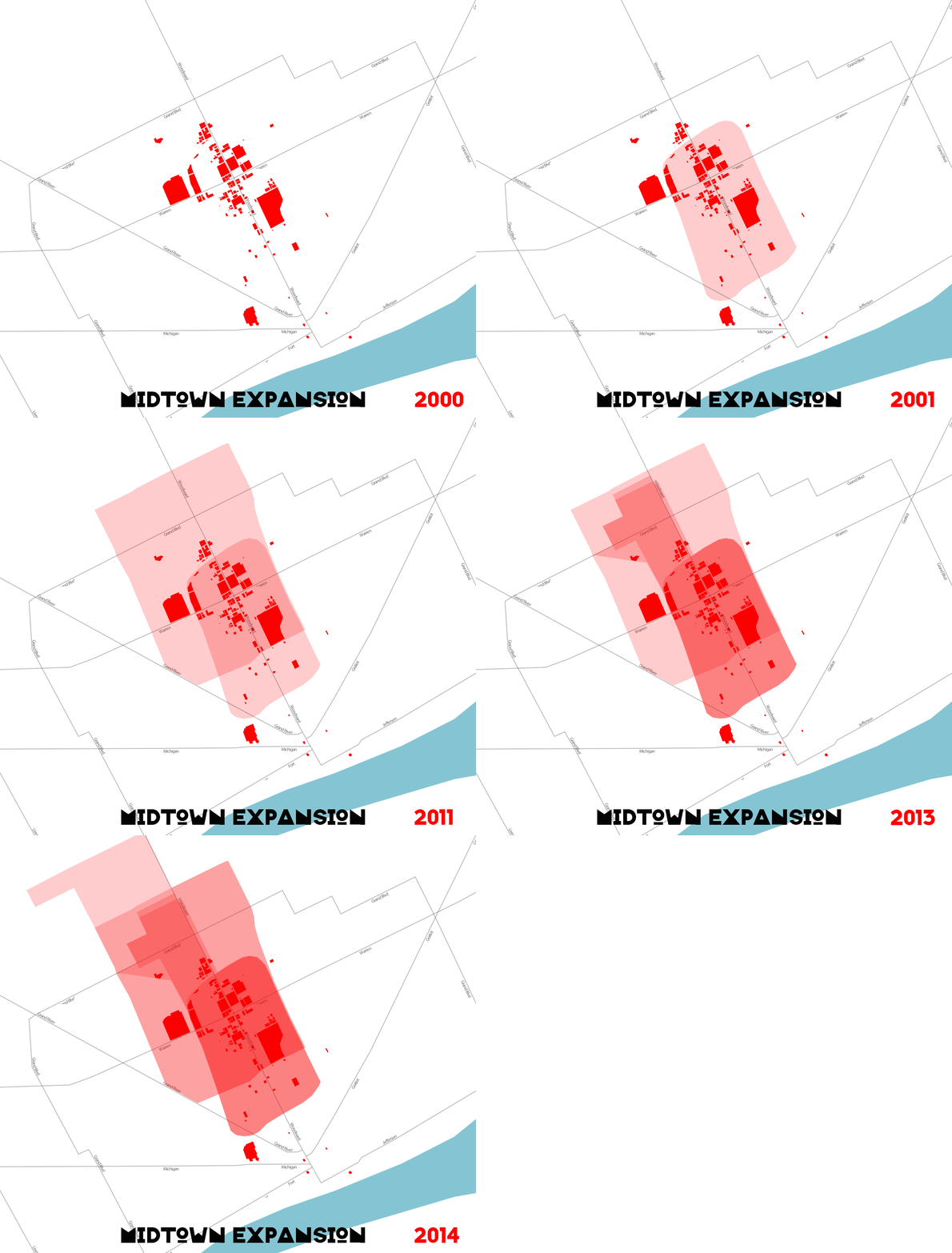
Midtown Detroit Expansion Map 2000 – 2014

midtown-expand Since 2000 the area known as Midtown has seen rapid expansion. It is important to note that even though Midtown is largely a conglomeration of various institutional partners and acts as an economic driver, there is no official geographic demarcation, which has seemingly allowed Midtown to continue reaching northward. In many instances the authority, Midtown Detroit Inc., offers incentives in an area before officially annexing it for inclusion in its official brochures. Below is a quick breakdown:

  • 1890 – residents in the Midtown area represented the highest earners in the entire state of Michigan.
  • 1910 – upper and middle class families began moving to Boston-Edison and Indian Village to get away from the factories, pollution, and noise
  • 1943 – racially divided Woodward (white west, black east)
  • 1959 – I-75 construction destroyed Paradise Valley, center of African American community, area on Hastings St.
  • 1960s – the areas of Midtown on either side of Woodward ranked among the most economically disadvantaged in the state of Michigan.
  • 1970s & 1980s – temporary housing in the Cass Corridor and drug deals in the open air
  • 1976 – University Cultural Center Association (UCCA) founded
  • 2001 – Midtown Detroit Inc. founded (detroitmidtown.com registered 01-06-2000)
  • 2009 – entire Midtown area minus WSU campus was considered “empowerment zone” which meant tax credits and discounts on building improvement costs
  • 2011 – UCCA merges with New Center Council, expands boundary to include Woodbridge, Northend, and New Center.

In early 2011, UCCA merged with New Center Council (NCC) and formally began doing work as Midtown Detroit, Inc. The organization has expanded its staff and geographic footprint, increased its real estate investment activities and is implementing additional programs. This new footprint incorporates TechTown and the New Center area which will allow the organization to work more closely with HFHS, University Preparatory Schools, the College for Creative Studies, TechTown and many other anchors.

  • 2013 – expands boundary to include Henry Ford Hospital area
  • 2014 – expands boundaries for live and buy incentives and again to include HFHS investment area

Data: Over 20,000 New Streetlights Installed in Detroit

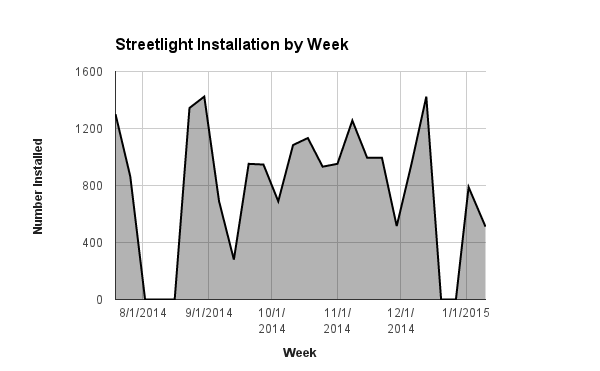
det-streetlightsThe Public Lighting Authority (PLA) reported that it surpassed 20,000 newly installed streetlights in September. As of 01/17/15 the Detroit Dashboard reports 20,572 new streetlight installed for an average of 935 per week, which is nearly double what Duggan promised in his State of the City speech in February 2014.

It obviously isn’t as straight-forward as a steady number each week, but rather ups and downs of construction, problem solving, etc. – however it appears that from the chart below weather was not a major installation hindrance.

det-streetlight-install-chartMy request for point locations of old streetlights was denied by the Public Lighting Authority:

[…] Specifically, the PLA hereby denies your request as the information contained on the PLA’s GIS system is exempt under MCL 15.243(1)(y), on the basis that the information requested “is designed to protect the security and safety of persons or property, whether public or private, including but not limited to […]

Maybe the DTE’s new management of the streetlights grid will make data more accessible?

detroitdata_get

Map: Detroit Streetlight Status 2014

det-streetlights-2014

In Mayor Duggan’s first “State of the City” (SOTC) speech (02/26/14), he promised many things from a bureaucratic, planning heavy 10 point plan. One of those many numerical goals that he set was to install 500 new streetlights each week.

Based on the spotty and often missing data on the Detroit Dashboard, the average actually comes out to 953 new streetlights installed each week from 07/19/14 – 01/10/15 (some missing weeks). It appears that this was one metric out of many that the Mayor was able to make good on.

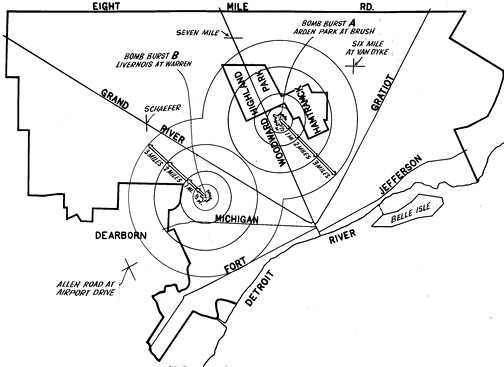
Map: Hypothetical Effects of A Nuclear Attack on Detroit 1951

hypothetical-effects-of-a-hypothetical-nuclear-attack-on-DetroitThis map was published in the Detroit News April 17, 1951, shows the hypothetical effects of a nuclear attack on Detroit. It appears that Arden Park and Brush along with Livernois and Warren held important targets for a nuclear bomb drop.

“Major airlines, Detroit automakers, IBM, the phone company and Wall Street planned employee shelters. The Federal Reserve designated banks for postwar check cashing, and a farmer in Iowa built a fallout shelter for 200 cows.”

Map: Running, Walking, and Biking Routes in Detroit

detroit-runkeeperMapbox has put together an excellent visualization from data collected through the Runkeeper phone app that helps you track your activity.

This was shared by the Detroit Greenways Coalition and later had some good coverage by Daily Detroit.

There is an obvious focus in Downtown and like many other major cities, people prefer to run along the river.

Map: The Greening of Detroit 1975-1992

greeningdetroit1975-1992This map comes from Solstice: An Electronic Journal of Geography and Mathematics (Volume VII, Number 1, 1996) at the University of Michigan. Authors John Nystuen, Rhonda Ryznar, and Thomas Wagner utilized Landsat imagery to do an fascinating analysis of a greening Detroit, which was largely due to increased vacancy and natural regrowth on abandoned structures.

Figure 1.  Landsat change image of Detroit showing changes in 
urban greenness from 1975 to 1992.  Imagery and analysis are joint 
ventures between Environmental Research Institute of Michigan (ERIM) and 
The University of Michigan, College of Architecture and Urban Planning.  
Green areas show tracts with greenness increase; red areas with 
greenness decrease; black areas, no change. Change data derived from TM 
1992 and MSS 1975 images of vegetation reflectance.

Map: Martin Luther King Jr. and Detroit

mlk-detroitMartin Luther King Jr. has a well documented presence in Detroit. He made a number of notable appearances in the city that inspired many working for civil rights in Detroit, including Grace Lee Boggs. King’s most famous Detroit appearance was the June 23, 1963 “Walk to Freedom” where 125,000 marched with him down Woodward Ave. and 25,000 listened to his speech in Cobo Arena. The 1963 speech was a test run for his ‘I Have a Dream” speech given during the March on Washington in August of the same year.

“I have a dream this afternoon, that one day, right here in Detroit, Negroes will be able to buy a house or rent a house anywhere that their money will carry them, and they will be able to get a job.”

  1. 1958 – King gives speech at 78th annual National Baptist Convention of America held at the King Solomon Baptist Church
  2. June 23, 1963 – “Walk to Freedom” down Woodward (start at Adelaide), speech afterwards in Cobo Hall
  3. Sept. 1963 – National Baptists Congress held at the King Solomon Baptist Church
  4. 1968 – “The Future of Integration” speech at Grosse Pointe [South] High School

A bust King was placed in pocket park at corner of Rosa Parks Blvd. & E. Grand Blvd. in 1981. Other namesakes include: Eastern High School renamed in 1968 as Dr. Martin Luther King Jr. Senior High School, Martin Luther King Apartments, Martin Luther King Junior Education Center, and Martin Luther King Jr. Blvd.

Anyone know what year Myrtle was renamed to Martin Luther King Jr. Blvd?

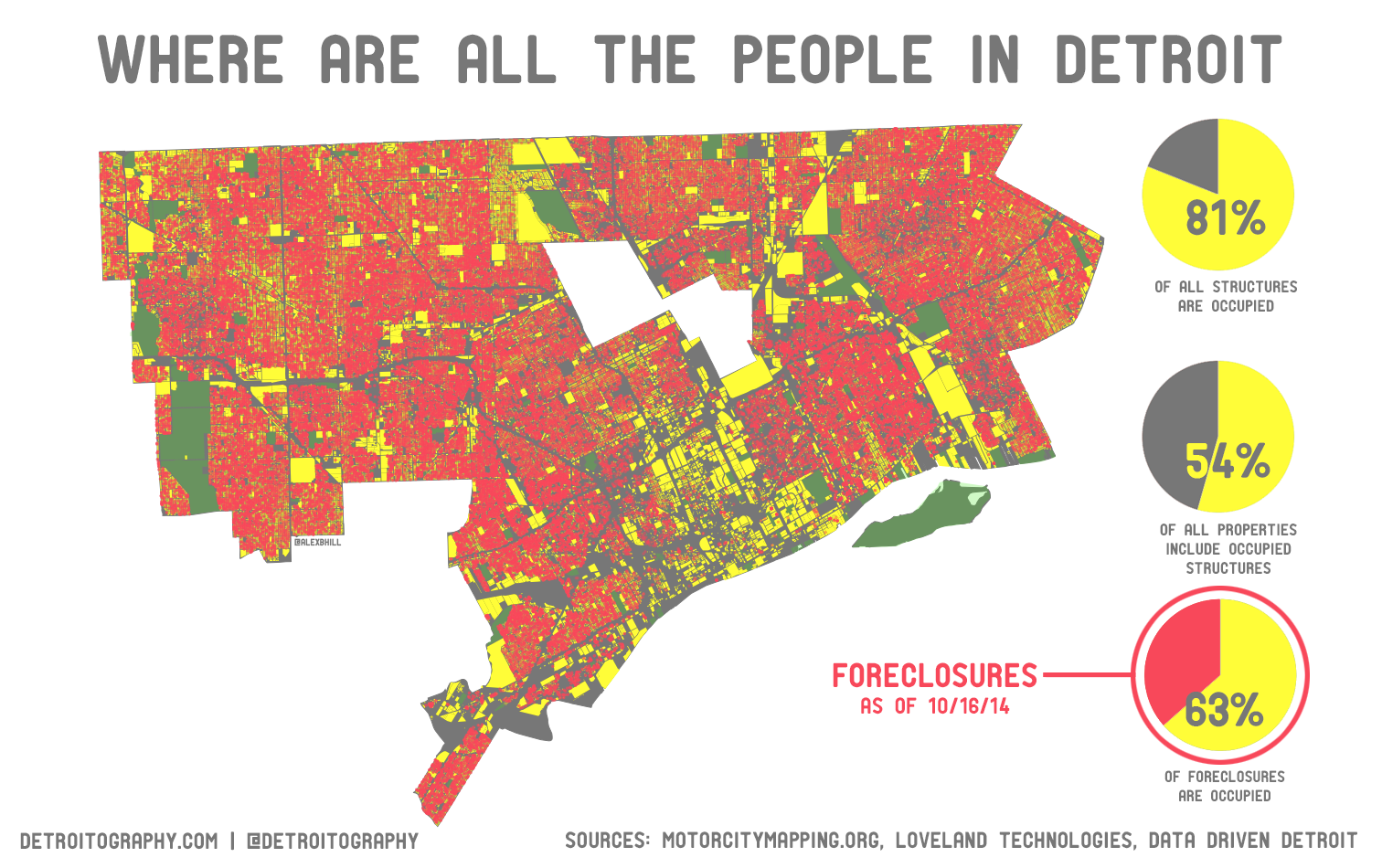
Map: Where Are All the People in Detroit – Occupancy and Foreclosure

det-occupied2There is a common media narrative that Detroit is empty, a blank slate, a blank canvas where anything can be done. However, this false narrative doesn’t account for the nearly 700,000 people who do live in the city. I pulled all of the “occupied, partially occupied, and possibly occupied” properties out of the Motor City Mapping (MCM) data and the above map is the result.

I found 203,723 occupied structures, which is an 81% structure occupancy rate and a total of 54% of properties with occupied structures. This doesn’t necessarily account for parks or large unused former industrial properties. The map however gives a far different picture than the common media narrative of an empty Detroit.

det-occupied-foreclosures2This year the Wayne County Treasurer identified 61,912 properties in Detroit for foreclosure in 2015. Loveland Technologies found that 35,669 of these properties (63%) are occupied according to the MCM survey data. More from Jerry of Loveland Technologies:

“According to Motor City Mapping data cross-referenced with the Wayne County Treasurer’s list of incoming foreclosures, 35,669 occupied residential homes are entering tax foreclosure in 2015. At an average 2.74 occupants per residence, as many as 97,733 people are estimated to live in these homes.

The potential loss of almost 100,000 more people from the city would not help any kind of revitalization. The foreclosure crisis is far from over for Detroit, which has seen a disproportionate amount of discriminatory subprime mortgage lending. Innovative solutions are needed quickly to help Detroit residents keep their homes.

Update:

Video from Loveland Technologies: A Hurricane Without Water: Detroit Property Tax Foreclosure, 2015

Data: 40% of Detroit Households Have No Internet Service

det-internetIn our current age of digital solutions for urban problems this stark digital divide cannot be overlooked.

Bill Callahan, director of Connect Your Community 2.0 compiled data from the American Community Survey (ACS) 2013 to come up with estimates for major US cities. Detroit ranked #2 for worst connectivity. That means that Detroit households had no access to internet, not even a smartphone.

As the City of Detroit launches more mobile apps, start-ups develop digital solutions, and services continually move online – there needs to be a recognition analog connections are necessary. That is unless Detroit wants to leave almost half of its population out of the loop.

Civic technology that utilizes texting services, community groups that help residents increase technology literacy, library branches that offer internet access, and old fashioned people-to-people canvassing will be critical pieces of inclusive Detroit development.

Some great examples of addressing this digital divide are the Detroit Digital Justice Coalition’s (DDJC) Disco-Techs introducing technology at community events around Detroit and the Detroit Digital Stewards program that provided community technology training focused on community mesh networks for internet connectivity.

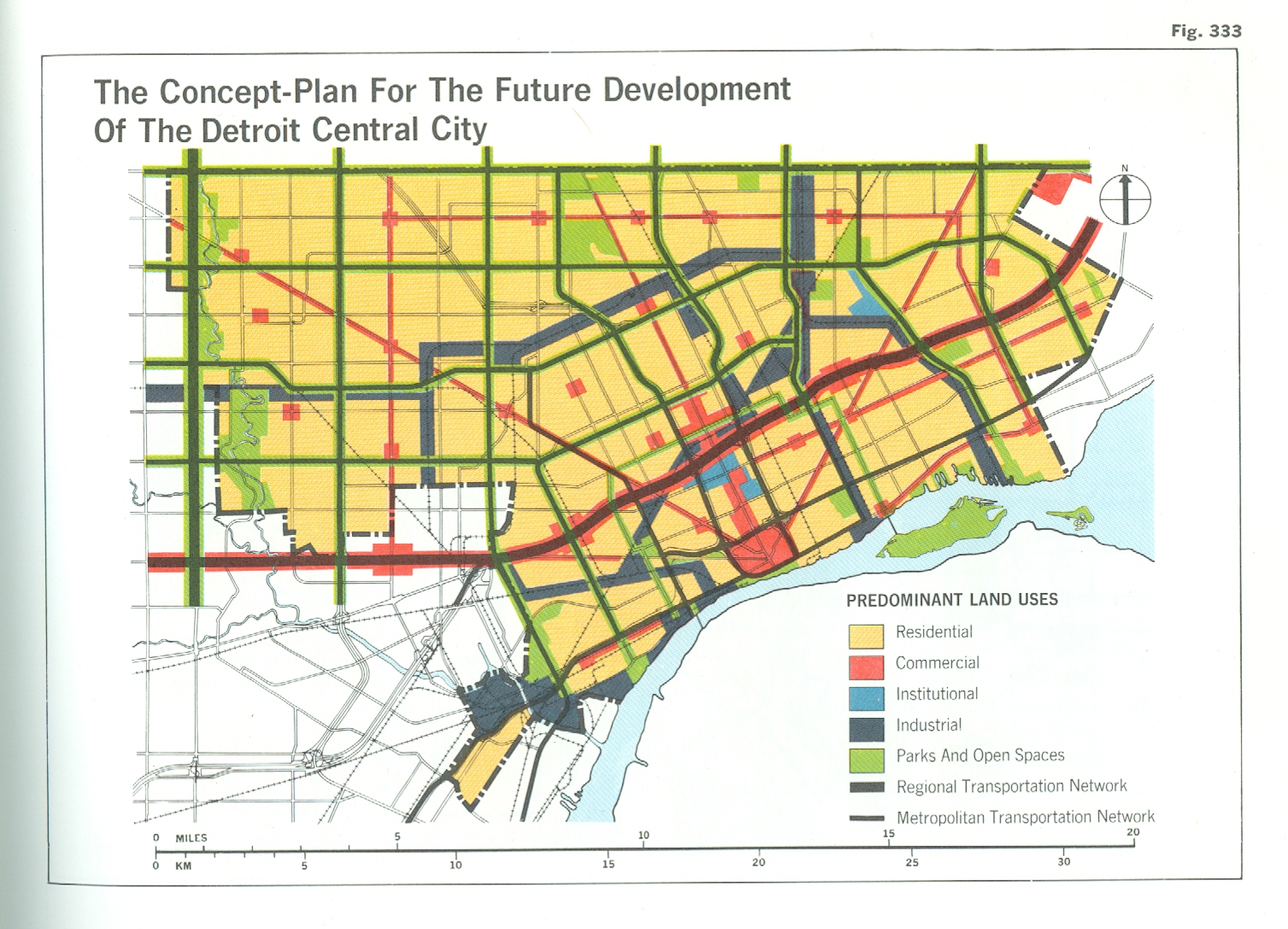
Map: Detroit Future City 1970

dox-future-plan0001

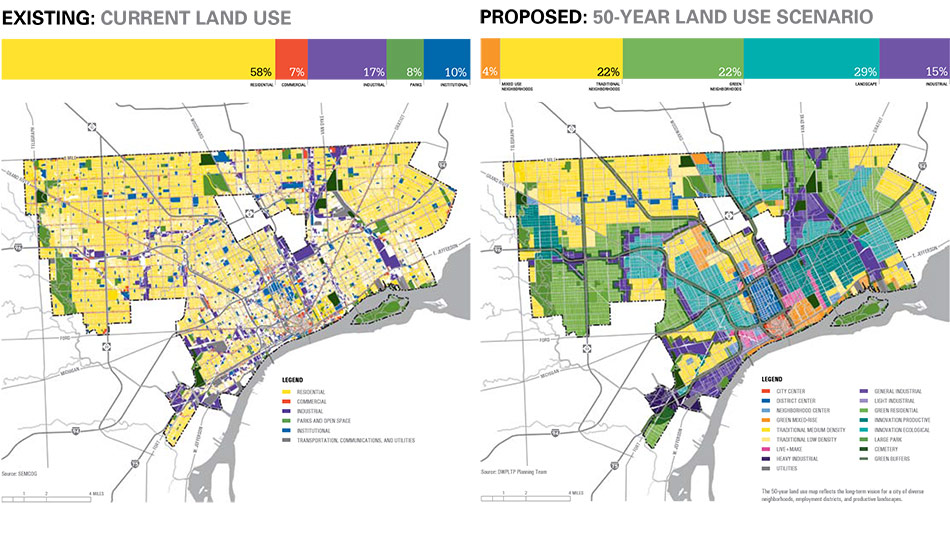
This map comes from Volume 3 of “Emergence and Growth of an Urban Region: The Developing Urban Detroit Area” completed in Constantinos Doxiadis and associates. The project was a collaboration between The Detroit Edison Company (DTE), Wayne State University, and Doxiadis Associates. Being that the 3 volumes (each around 400 pages) were privately funded the plans and ideas never came to pass.

If you compare the above Doxiadis map and plans with the most recent Detroit Future City (DFC) plan there are some striking similarities beyond color scheme. The main differences seem to be that Doxiadis did not make a plan for a future with continually decreasing population where the DFC includes large swaths of ecological and green land uses that plan for no people.

detroit_works_01

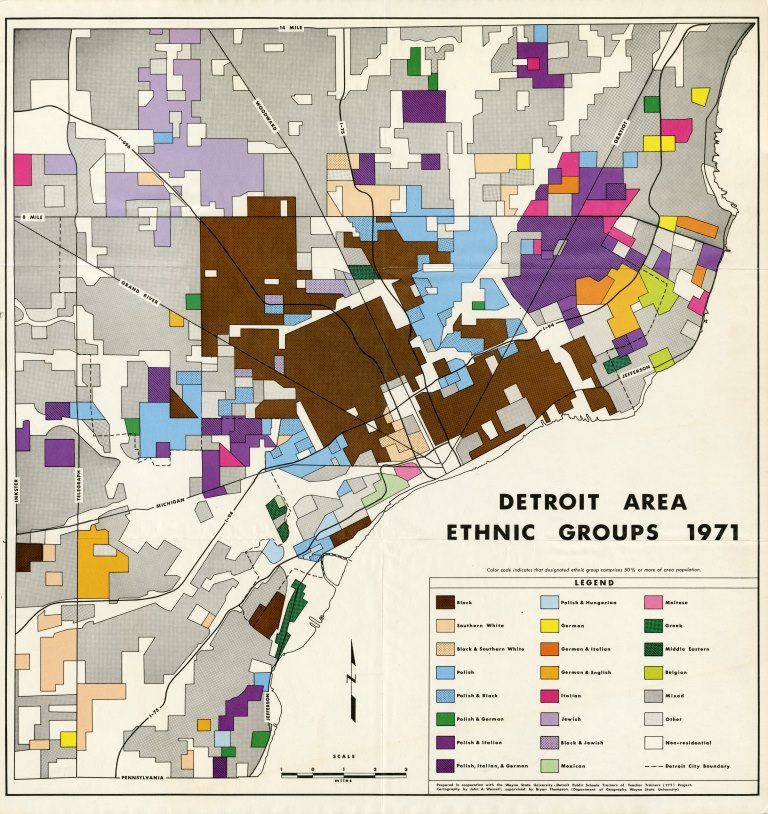
Map: Detroit Area Ethnic Groups 1971

det-ethnic-groups-1971

The Detroit Historical Society has so many great maps in their archives!

This map is an excellent addition to the series of maps that we have ranging from:

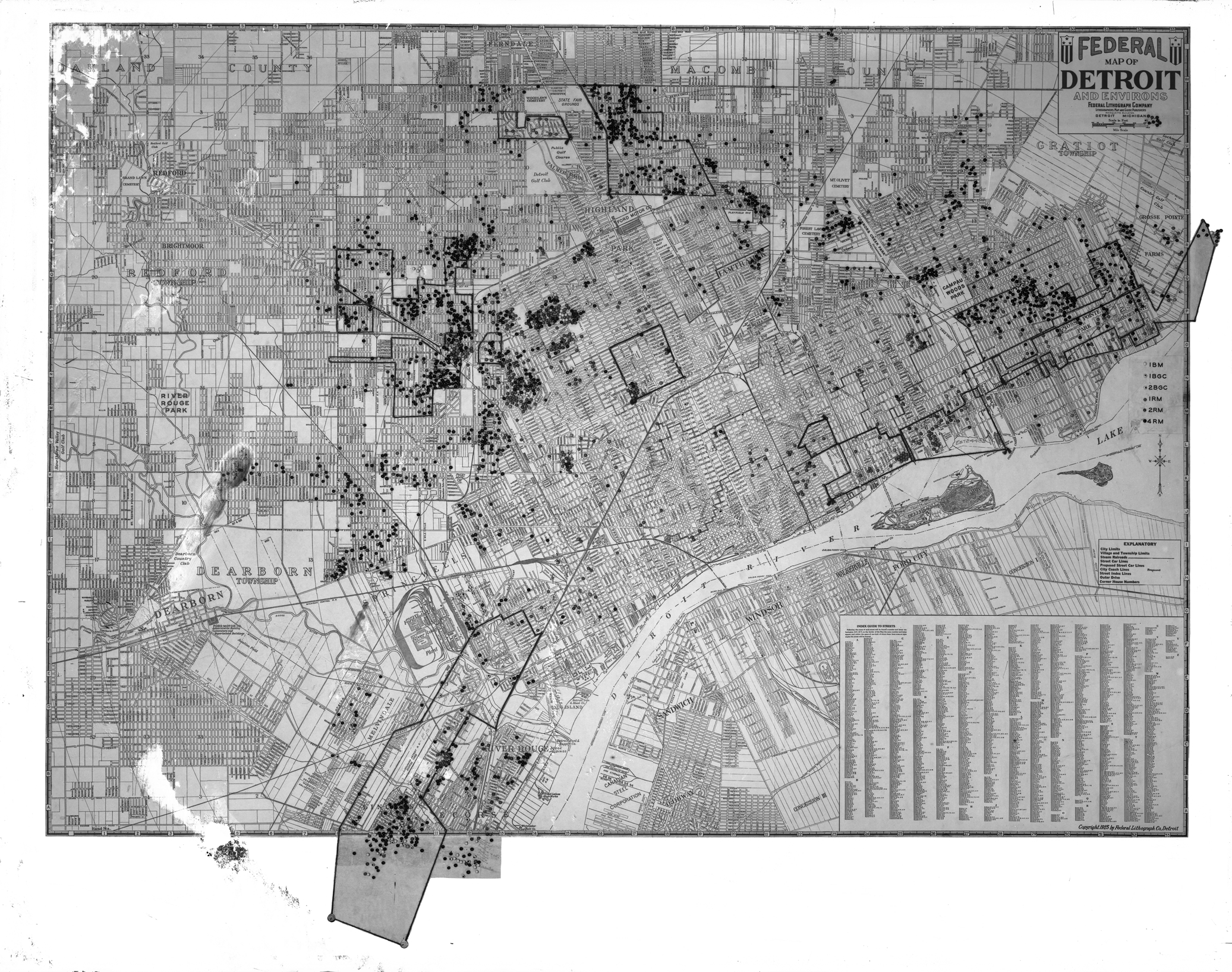
Mystery Federal Map of Detroit

fed-map-detroit The significance of this map is in what has been added. Certain areas have been outlined and points placed across the map. It is unclear what it all means. The added key on the right regarding the points reads:

Screen Shot 2015-01-05 at 7.27.15 AM

All that is known is that it was created (year unknown) by the Federal Lithograph Company of the Marquette Building. Leave a comment if you can solve the mystery! Thanks!

Source: Digital Collections – Burton Historical Collection

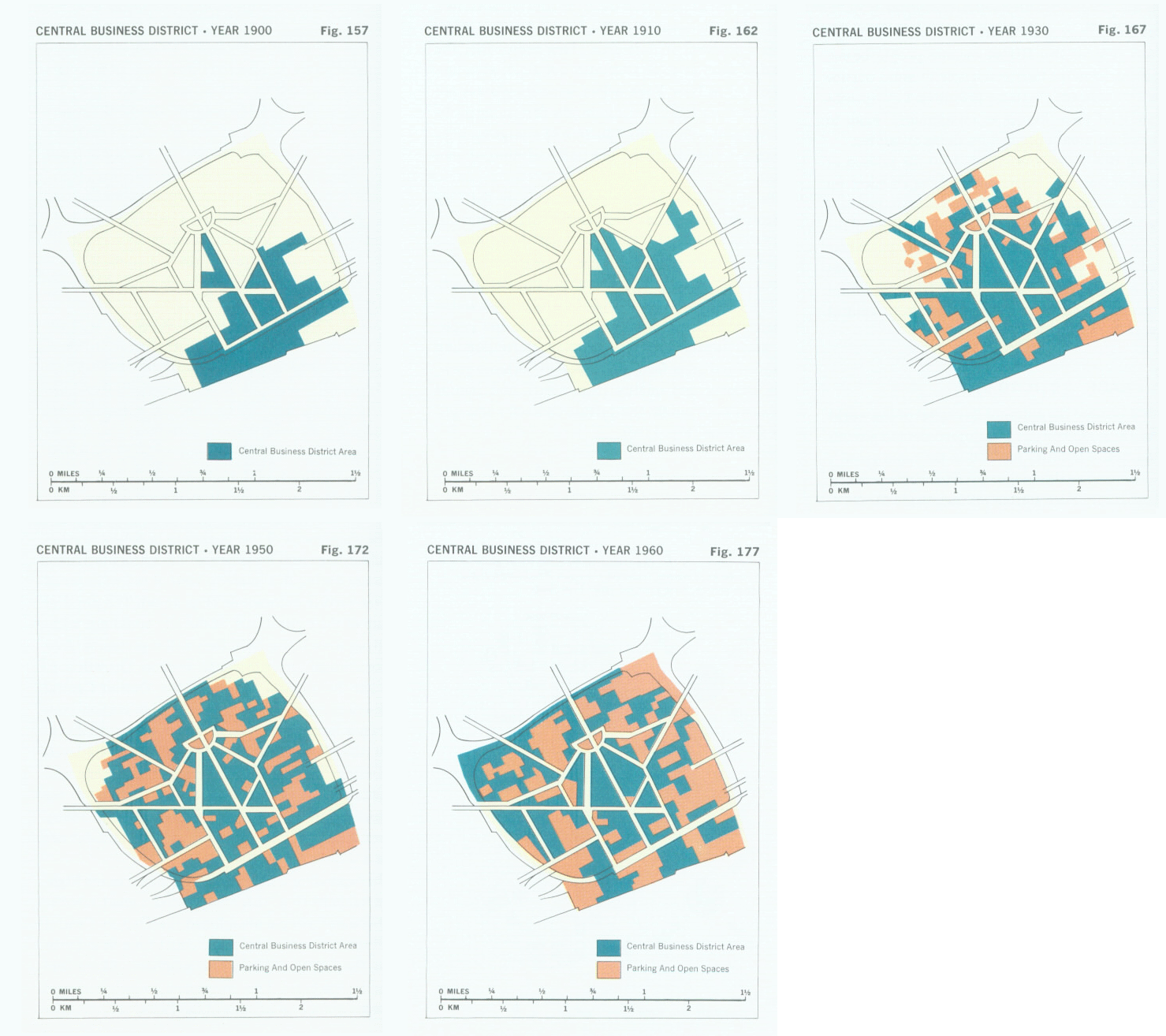
Map: The Growth of Parking Lots in Downtown Detroit

dox-parking

The expansion of parking in Downtown Detroit has followed the economic decline and loss of activity Downtown. There has been a fascination with the growth of parking lots for quite some time. We’ve compiled parking lot maps from the 1936, 1974, and 2011. Constantinos Doxiadis and associates created these series of maps that follow the parking pattern with the city development.

Source: “Emergence and Growth of an Urban Region – The Developing Urban Detroit Area, Vol. 3”, Doxiadis Associates, Wayne State University and The Detroit Edison Company, 1970

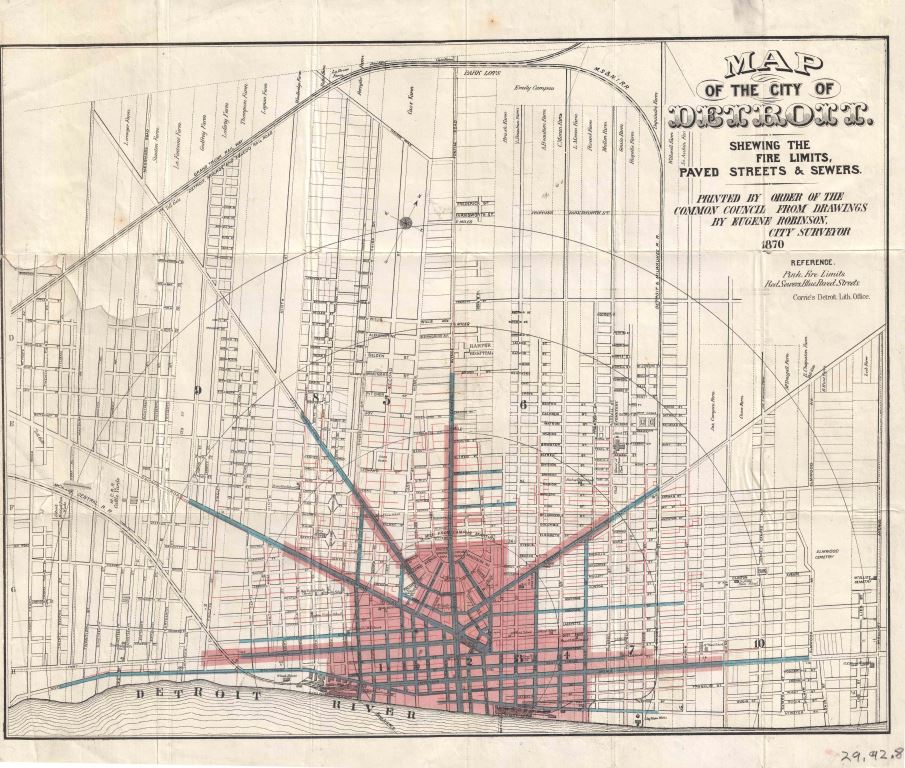
Map: Extent of Detroit City Services 1870

det-city-services-1870

This map shows how far streets have been paved, where the fire department will serve, and sewer system.

The Detroit Historical Society writes:

“In 1870 it would have been important to show what parts of the city received certain services. This map is shaded pink where fire protection was offered, blue highlights paved roads, and red indicate sewer lines.”

Map: Detroit Area Traffic Destinations 1955

det-traffic-study

This is one of the most beautiful maps from the Detroit Historical Society collection.

“The Detroit Metropolitan Area Traffic Study produced this map in 1955 charting “trip desire”. This means it shows where the most popular destinations are for all vehicle trips within the metropolitan area.”

Map: Income, Race, and Toxic Release in Detroit

det-toxic-release

Elisavet Papatheodorou, MSW created this map for a community group in the Delray area of Southwest Detroit. She writes:

“Low-income communities of color in urban areas often bear a disproportionate burden of environmental pollution. This map measures environmental justice disparities in Wayne County communities based on the presence of toxic chemicals and one social factor: median family income.”

The data sources for the map:

“This map shows EPA Toxic Release Sites in Wayne County, Michigan as they related to median family income in 2009 (American Community Survey, 2005—2009). Green points mark toxic release sites while income brackets are classified by color. White areas on the map signify areas without income data. These are often industrial parks or complexes.  Note the white areas such as Zug Island and Carbon Works.

Note the concentration of sites in Southwest Detroit and adjoining suburbs such as River Rouge. Conversely, note the absence of sites in proximity to the highest income areas such as Grosse Pointe.”


Map: Detroit Streetlights 1897

det-public-lighting-1897

I’m so excited that the Detroit Historical Society has started a regular post of maps from their archives!

“In 1897, the Public Lighting Commission mapped every street light in the city, differentiating tower lights and single pole lights. Published by The Calvert Lith. & Eng. Co.”

We attempted to FOIA the current locations of streetlights from the Public Lighting Authority (PLA) and were told we couldn’t have the data. Anyone have the data and willing to share? DetroitData.org