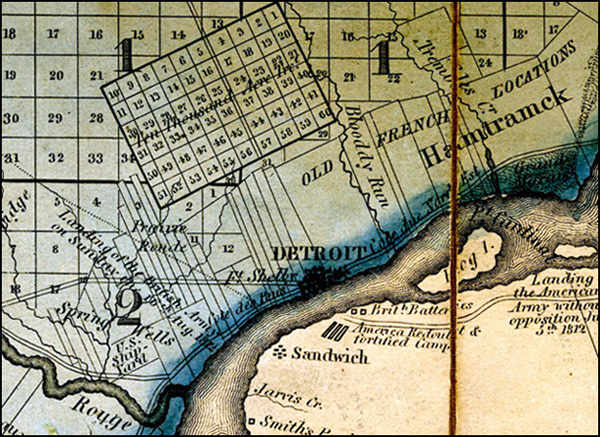
Map: Detroit’s 10,000 acre plot 1825

1825-detroit-10000acrepplotThis map is one in the three part series considered to be the first detailed map of the Michigan Territory.

“In the map detail of Detroit we can see the clash of land division systems: Old French long lots meet up with Judge Woodward’s Ten Thousand Acre Tract and are filled in all around with the U.S. Public Land Survey System. To the southeast we can see part of Ontario, Canada, where Windsor was still called “Sandwich.” Significant sites of the War of 1812 are noted on the Windsor-Essex Peninsula.”

Map: Detroit in Chalk

chalk-detroit

Detroit holds a fascination to many people for varying reasons. This wonderful chalk map by Fritz Haeg was drawn to help with the planning of a project that hopes to explore the rise of art collectives in the city.

‘Detroit Methods’ is a studio for exploring the particularly innovative ways in which some contemporary artists are working in Detroit today, while developing student projects with similar strategies and approaches. We are looking at ten local art collectives and artist run initiatives, and their ways of working that extend beyond the conventional private production space of the solitary artist studio and the controlled public presentation space of the commercial gallery and art institution. Instead we see these artists turning into the home, and extending out to the commons, i.e. the street and shared public spaces of the city. The fundamentals of human culture, survival, and pleasure become the source and focus. Eating, gathering, conversing, gardening, cooking, composting, constructing, playing, bathing, cleaning, socializing, and learning often become central to the work. In the process our assumption of a clear division between daily life and elevated art may become blurred.


Map: Detroit around America

detroit-places

I had been really interested in the various places around the US that have “Detroit” in their name. I was doing a pretty terrible job manually searching for these locations. Thankfully, Paul Ramsey put together a handy heat map tool based on data from geonames.org.

I knew there was a Detroit Street in Ann Arbor, Michigan and I had already found the city of Detroit Lakes, Minnesota. The big surprise was discovering the village of Detroit, Oregon named after Detroit, Michigan in 1890. Some quick googling brought up a news story of the town voting to change (47-37 to not change) its name to “Detroit Lake,” after the adjacent lake and state park. The decision brought the ire of Michigan residents including city councilman Gary Brown who thought “that residents are making a big mistake because the Motor City will one day return to its previous glory.” It is noted that the majority of residents (total population 2010 = 202) and vacationers call the village Detroit Lake anyway.

Search other places using the Placenames Heatmap

Event: #Maptime Detroit – Open Data Dive

maptimeDETROIT3

Loveland Technologies will be hosting this month’s #maptime where we’ll dig into the various open data portals available to Detroit and learn how to request datasets.

Diana Flora from Data Driven Detroit will lead a presentation on open data and then we’ll collaborate to look for data and make some maps from available open data.

What data do you want to see? What would you do with that data? Make a map?

When: March 31st, 2015 from 6-8pm

Where: Loveland Technologies, 1418 Washington Blvd., Detroit, MI

What: Open Data!

RSVP: Facebook // Meetup

Map: Detroit Liquor Licenses 2011, Fresh Corner Cafe, and Green Garage

photo(7)

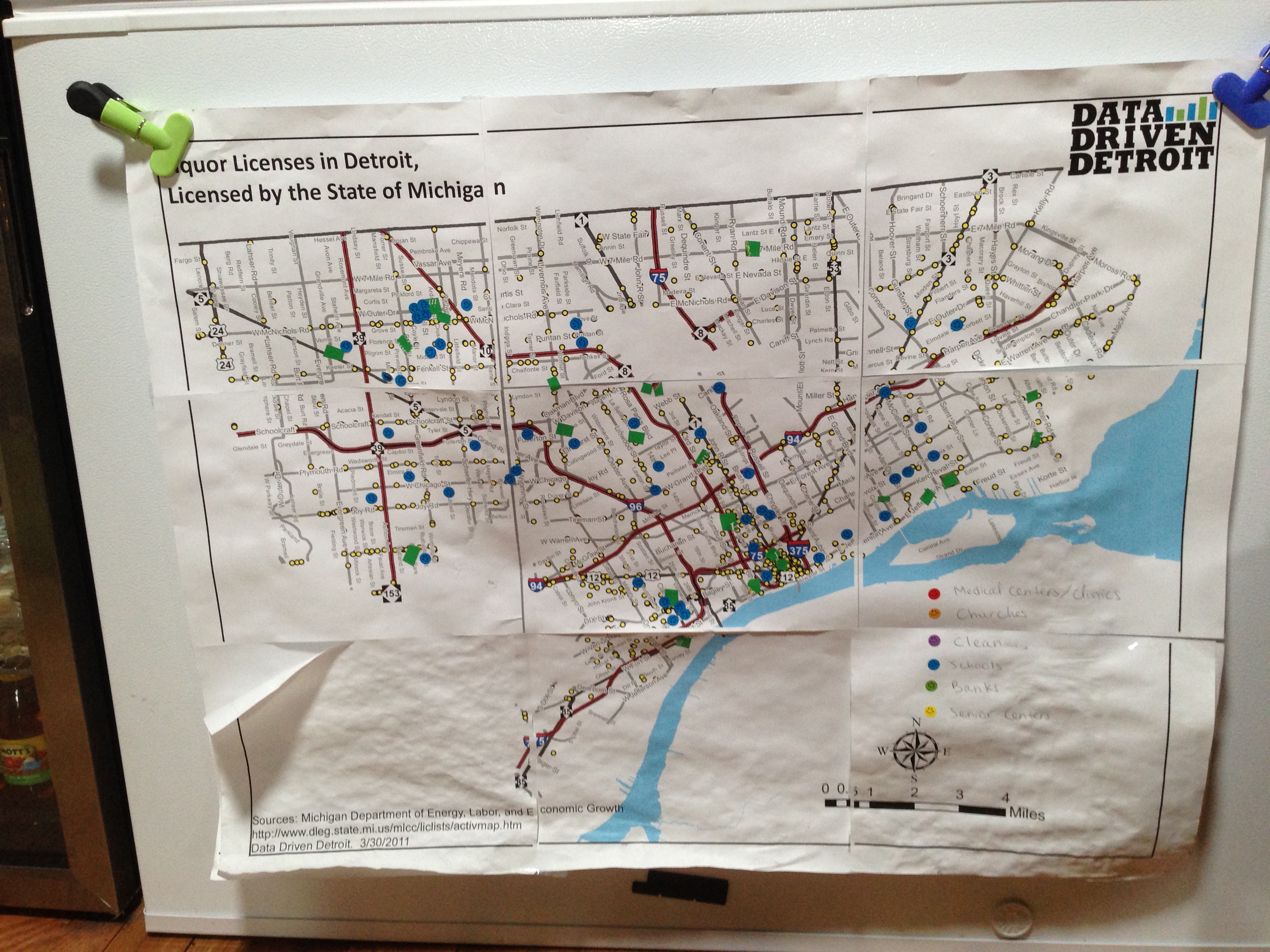
This map was spotted on the Fresh Corner Cafe fridge in the Green Garage. The base map is 2011 Liquor Licenses compiled by Data Driven Detroit with blue stickers for schools and green I think marks the various Fresh Corner Cafe locations?

It’s always nice to see maps in action. Do you have a cool Detroit map hanging in your place of work? Submit it!


Map: Detroit Master Plan 1951

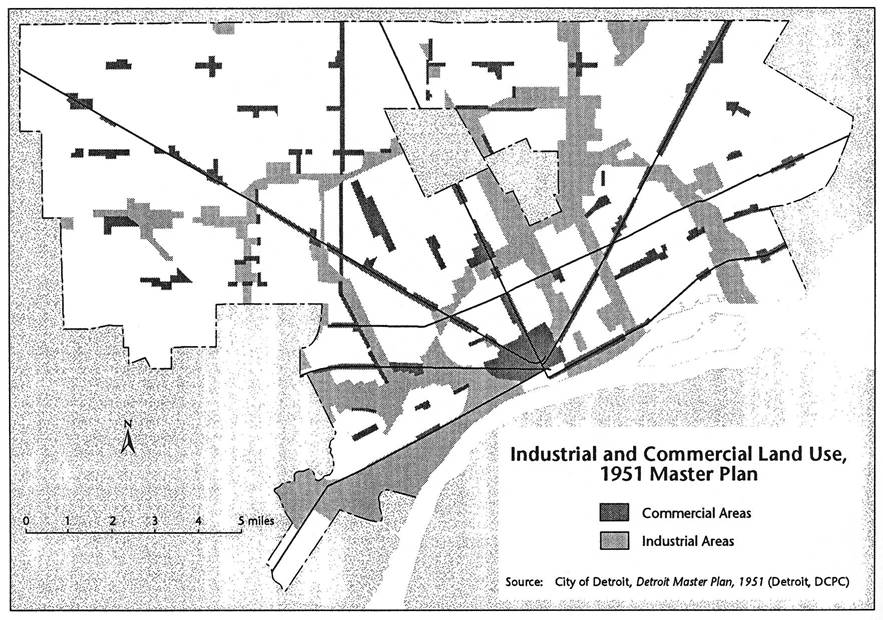
LandUse1951This Master Plan map from 1951 is focused on land use. The 1950 Census puts Detroit population at its peak of 1,849,568 people.

The most significant element that can be seen is this map is the extent of “industrial” land use. Much of the 1951 industrial areas in Southwest and along the I-75 corridor are no longer. Similarly, the “commercial” areas have shrunk considerably, especially Downtown and many of the neighborhood commercial areas.

Map: Mortgage Originations 2014

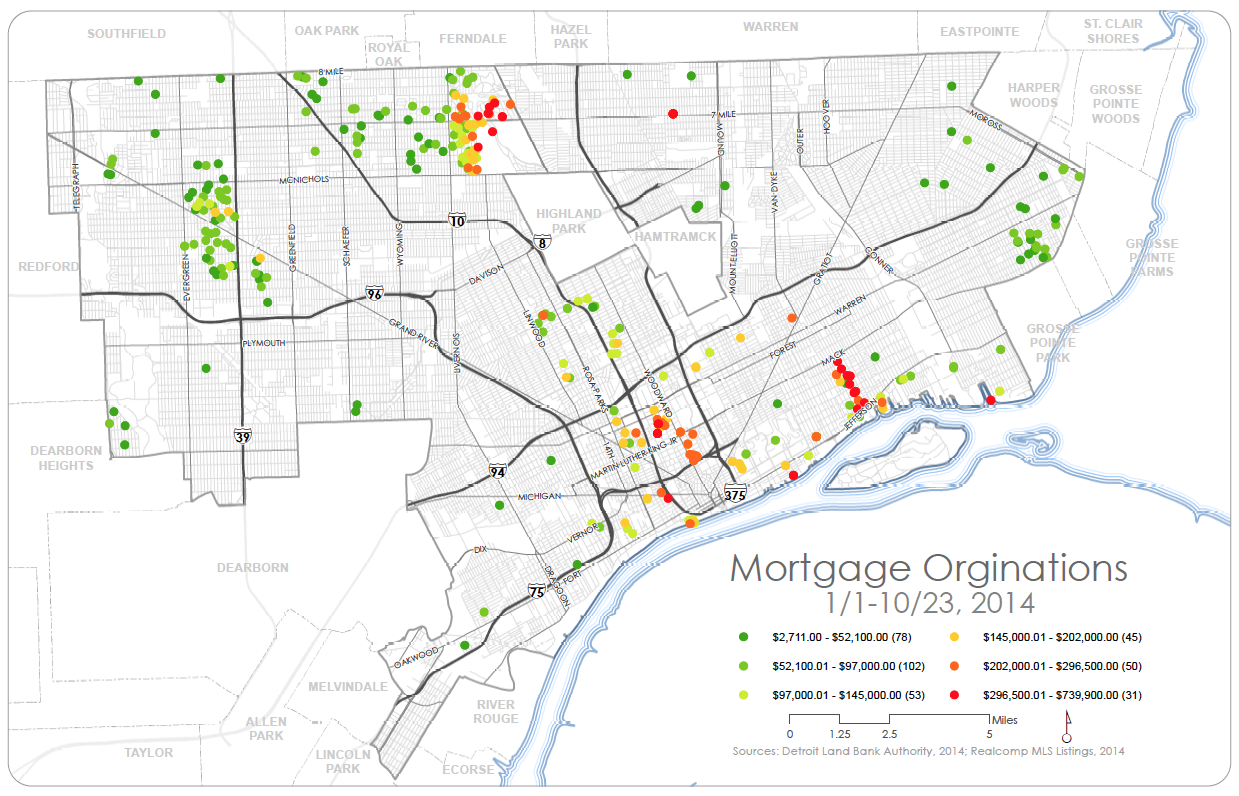
dlba-mortgagesThis map from the Detroit Land Bank Authority (DLBA) shows key areas in Detroit where residential investment is occurring as well as where mortgages are more likely to be given to homeowners. There is similarly a clear divide in wealth and home value associated with different areas (i.e. Grandmont -Rosedale/ East English Village vs. The Villages/ Midtown/ Palmer Woods).

Map: Drawing Detroit by Tyree Guyton

tyree_guyton_detroit

This hand drawn map by the Heidelberg Project’s founder Tyree Guyton is a part of MOCAD’s new Detroit Research project. Guyton’s hand drawn map kicks off a series called “Drawing Detroit” which aims to collect personal and hand drawn maps of Detroit.

Check out the different hand drawn and hand maps that we’ve collected over the last few years.

Map: Detroit’s Second Great Fire

mcm-fire

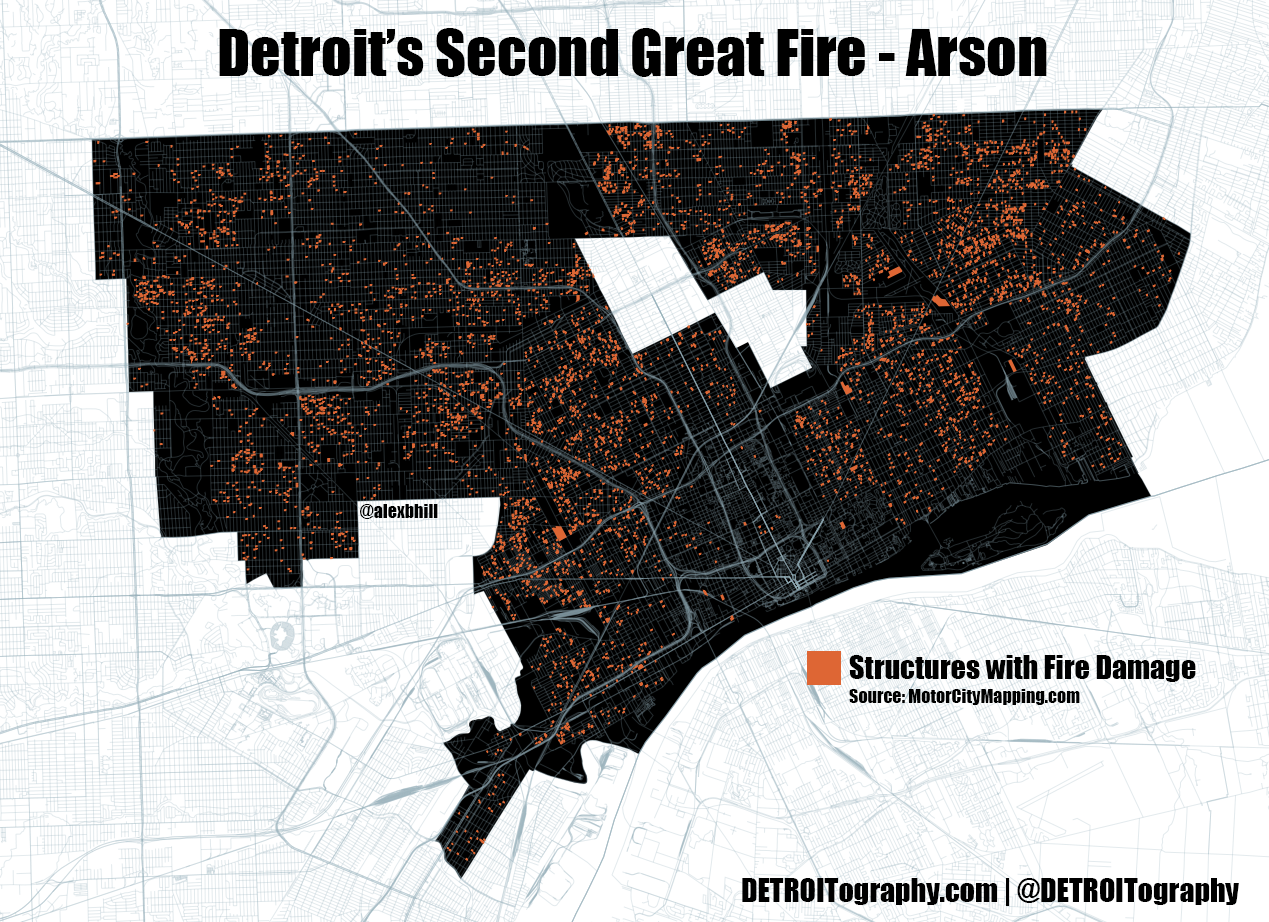
Detroit’s “Great Fire” of 1805 is solidified in the history books as a defining moment for the city. With only the brick chimneys remaining, Detroit residents dug in and rebuilt their city. Justice Woodward drew up his inspired hub-and-spoke street plans (1806) to bring Detroit on par with cities like Paris and Washington D.C. Following the “Great Fire” Detroit saw continued progress and became one of the most well-known cities in the world for its industry.

However, Detroit has had a more recent “Great Fire,” one that began in the 1970s and is most often seen on display during Devil’s Night. As Detroit’s population declined and crime increased, both dedicated residents and criminals took to setting abandoned homes on fire. A news segment from 1975 features an interview with two Detroit residents talking about how they decided to torch an abandoned house on their block because it was being used as a drug house.  They were concerned for their children’s safety.

This decades long “Great Fire” has been a result of multiple factors, but could be summed up as varying degrees of desperation.

The recent Motor City Mapping (MCM) project identified 8,641 structures with fire damage. This number obviously can’t capture the issue of arson since the 1970s nor demolition of burned down homes, but is an important marker of what the city has faced in the past and continues to confront. The Motor City Muckraker has been cataloging faulty fire hydrants and their effect on the work of firefighters and families who lose their homes. Detroit’s second “Great Fire” may finally be waning, but significant infrastructure issues need to be addressed in order to ensure the safety of residents.


Hand Maps put focus on People in Detroit

I’m teaching the “Data, Mapping, and Research Justice” workshop again with Co.Open/ Allied Media Projects. Last Thursday we had a full class of people eager to learn about and make maps to help them better advocate and bring resources to people in Detroit.

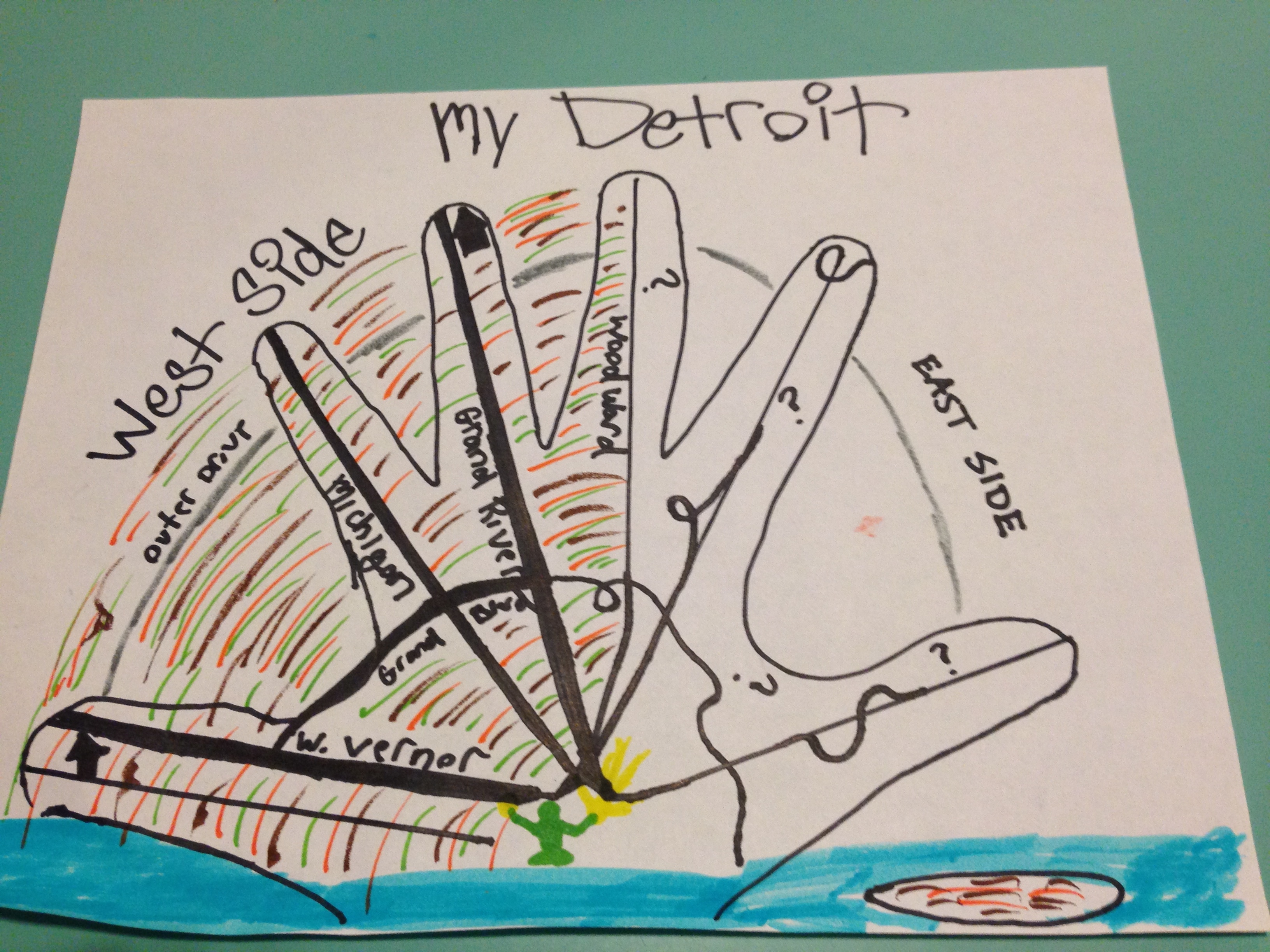
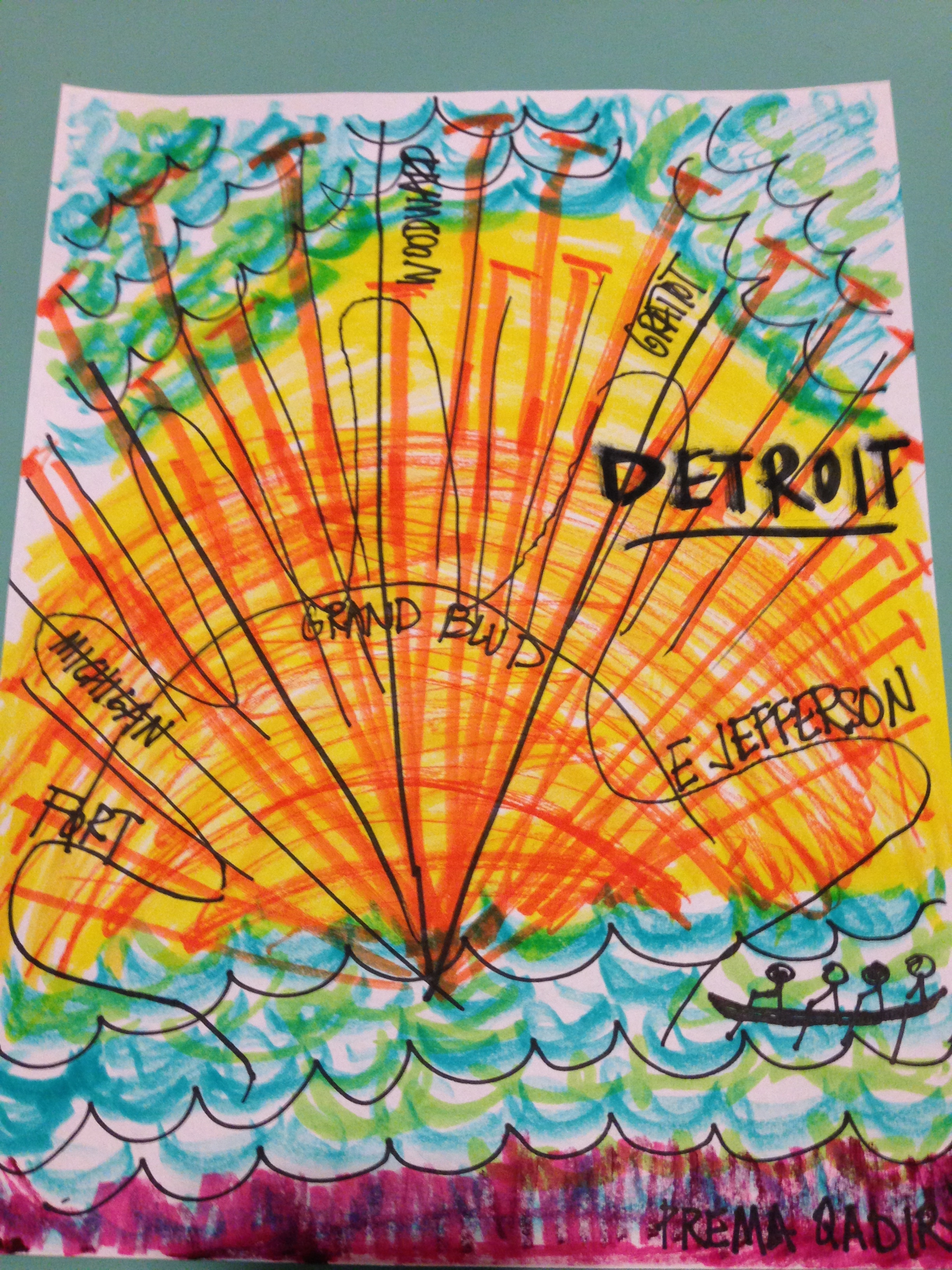
We started off the workshop with the hand map exercise and participants were asked to “map their Detroit” and the values and experiences they have gained from Detroit. Each of the participants had a different story; different sets of experiences, yet everyone spoke about the importance of people and the need to focus efforts on getting people what they need. I could never do justice to explain the details of every person’s hand map, so I will just summarize a few key points:

  • There are pockets of development in Detroit, but they aren’t connected
  • The suburbs are segregated enclaves surrounding the city
  • The East/ West divide highlights areas of Detroit we may still not know and people we haven’t yet met.
  • St. Louis to Detroit, similarities in segregated metropolis
  • Don’t forget Highland Park and Hamtramck
  • A lot of hope for Detroit as it is growing
  • Water is a critical need for everyone
  • Pockets of investment and areas of need
  • Boundaries of and within Detroit that limit us, need to reach across

IMG_1443 IMG_1444 IMG_1445 IMG_1446 IMG_1447 IMG_1448

Map: Neon Detroit Map Love

detroit_sisters

This gem came to us on Valentine’s Day from George Vidas of SignifiersSigns. Even though Valentines is over, this neon seems appropriate  everyday for our heightened love of Detroit maps.

Credit:  George Vidas.  Detroit, I Love You, But Youʼre Bringing Me Down  (Where Are My Sister Cities Tonight?).  2014.  Neon & salvaged plywood.

“Abridged backstory:  Willie’s (the Shinola sister store) has a big ol neon USA border, mounted on plywood.  This planted the seed for doing a neon Detroit outline.  But it’s not an accurate border if you don’t represent the negative space of Hamtramck and Highland Park. How do you portray the relationship of Hamtramck, Highland Park, and Detroit?  Well, it’s complicated.
Feel free to publish / share / print out and use to dry your tears.”

Map: Doctorless Zones of Detroit 1971

doctorless

This map is included in William Bunge’s book co-authored with R. Bordessa, “The Canadian Alternative: Survival, Expeditions, and Urban Change.” The Doctorless Zones map is one among a series that highlight the divisions between Bunge’s idea of three cities: rich, workers, and slums. He calls the the City of Superfluity, the City of Need, and the City of Death. As can be seen on the map, the inner city (City of Death) is seriously lacking health services.

There is a similar problem today where large areas of Detroit do not have any primary care or family doctors available, infant mortality is high, and there aren’t even easily accessible urgent care centers.

Map: Detroit Stoplights 2015

det-stoplights

The new open data portal for Detroit didn’t have as many exciting datasets as I had hoped, but this was one that peaked my interest. Driving all around Detroit on a regular basis you will often run into signs stating that certain traffic signals are under study for removal. I’ve been surprised to see quite a few of these, but when looking at this dataset it appears as though the city has very few traffic lights. Downtown and Midtown are well saturated with traffic lights and the major North-South and East-West roadways are well traffic-lit. What is most odd is the very empty Northwest corner and Far Eastside where the highest population densities also are present. Why so few traffic lights in populated neighborhoods? Is it a function of Detroit’s growth history? Infrastructure? Are more people involved in traffic accidents in those areas?

EDIT 03/09/15:

A commenter on Facebook noted that these appeared to only be City of Detroit traffic signals because there are more County roads in Northwest Detroit. This can also be seen by locating Woodward Ave., which is a State of Michigan trunkline highway, and noticing that there are blank spaces where traffic signals would be located (same with Grand River Ave./ US-16 or Gratiot Ave./M-3). Therefore this is in no way a representation of all traffic signals within the City of Detroit, but rather the traffic signals that are managed by the City.

Is Detroit’s Data More Open?

image (3)

Almost half the “datasets” that the City of Detroit released are simplified duplicates of larger datasets or visualizations. In truth the city released about 46 datasets, about half of the “over 90” datasets that were announced. Out of the 46 actual datasets released, only 28 are new datasets that couldn’t already be found at the old City of Detroit GIS page, Data Driven Detroit (D3), or DetroitData.org. This is still an incredible gain for open data. I just don’t understand the reason behind inflating the numbers.

After years of a substandard webpage with download links to GIS files, the City of Detroit entered the modern open data era with a Socrata data platform supported (read: free) from their new Socrata Foundation. The city has been trumpeting that it has released over 90 datasets to the public. This would be an incredible feat in a formerly bankrupt government with multiple departments spread out and often at odds with one another. Yet, there are fewer datasets from the City today than when they were using the old webpage with download links to GIS files. Many of those now missing datasets were historical and have relevance to the current changes in the city.

The bigger story here is that the City has adopted a comprehensive, broad ranging, open data policy for all departments that places City data into the public domain. Regardless of how many datasets were released, this is the most important step towards progress in open data for Detroit.

“The cornerstone of this major shift in City policy will be that data and information, unless exempt from disclosure under State or federal law, will be available to the public, starting with an open data portal.”

data.DetroitMI.gov

Data in Detroit made leaps when a Chief Information Officer (CIO) was appointed, but appointee Beth Niblock faced the daunting task of getting the City Government off of a mainframe and upgrading its systems for the current century. She often spoke about the issues of not having up-to-date computers and getting push back from various departments. Then a Deputy Director of Civic Technology Outreach was hired with support from the Knight Foundation. Garlin Gilchrist, appointed August 2014, is focused on equitable access to information and yet again open data for Detroit was a goal within reach.

However, many people and organizations had already given up waiting for the city to launch an open data portal.

Year Portal Organization
2009 Fileshare Site Detroit Data Collaborative (via D3)
2014 Esri/ ArcGIS Data Driven Detroit
2014 CKAN Civic Tech Community
2015 Socrata City of Detroit

Data Driven Detroit (D3) was founded in 2008 with support from City Connect Detroit ($1.85 million from Kresge Foundation and Skillman Foundation) as the Detroit Area Community Indicators System (D-ACIS) with the idea of pushing for more open data. The organization became a Detroit data powerhouse, but the majority of their data remained behind closed doors. There was an unsupported initiative within the organization called the Detroit Data Collaborative (DDC) led by a few dedicated staff members that attempted to make their data more accessible, but that only lasted about a year. Finally in 2014, D3 launched their own open data platform through the Esri ArcGIS OpenData Beta initiative.

I also gave up waiting for a data portal solution and worked with a group of individuals to launch DetroitData.org which is built on the leading open source data sharing platform in the world, CKAN from the Open Knowledge Foundation (OKFN), which is utilized by major international institutions and city governments alike. The great opportunity with CKAN is to make open data a community in Detroit where everyone with an internet connection can share and collaborate with data. Detroit has a thriving civic technology community already and too many institutional platforms are restricted and insular. Some great CKAN examples come from OpenDataPhilly.org and DATA.GOV.

Back to the issue of duplicate datasets, they are not a new occurrence. Many organizations take the time to simplify datasets to help make them less cumbersome and more usable, but that doesn’t increase the amount of data.

Datasets Duplicates Total
City of Detroit GIS 75 31 106
data.DetroitMI.gov 46 47 93
DDC 19 0 19
D3 72 5 77
DetroitData.org 31 0 31

There are a few city departments that are conspicuously missing from the new data portal, namely Detroit Water and Sewerage Department (DWSD) and the Department of Neighborhoods (DON). In a recent interview on WDET, Gilchrist noted that finance data would be made available soon to improve the transparency efforts. It will be great to see how the community meetings go where Gilchrist will help residents navigate the open data portal site.

We can only hope that the City’s new open data policy actions will align with the Mayor’s (and staff) statements about becoming a more transparent city government. The City of Detroit is fighting many fires now and I hope that in the process they don’t forget about collaboration and the citizen driven efforts already under way. The open data portal has been a small step overall for data in Detroit, but the adoption of an open data policy holds huge potential for the future.
Map: Detroit Steam Pipelines 1910

det_steam1910

Thanks to an old discussion, a question about all the Downtown/Midtown steam may be answered or maybe there are just more questions. It seems that Detroit Thermal LLC is no longer operating. The steam plant on Willis St. (behind McDonalds/LTU/Hopcat) also appears to be dormant. Is all the steam now supplied by the human hazard that is the trash incinerator?

Map: Detroit Homicide Disease Diffusion 2003

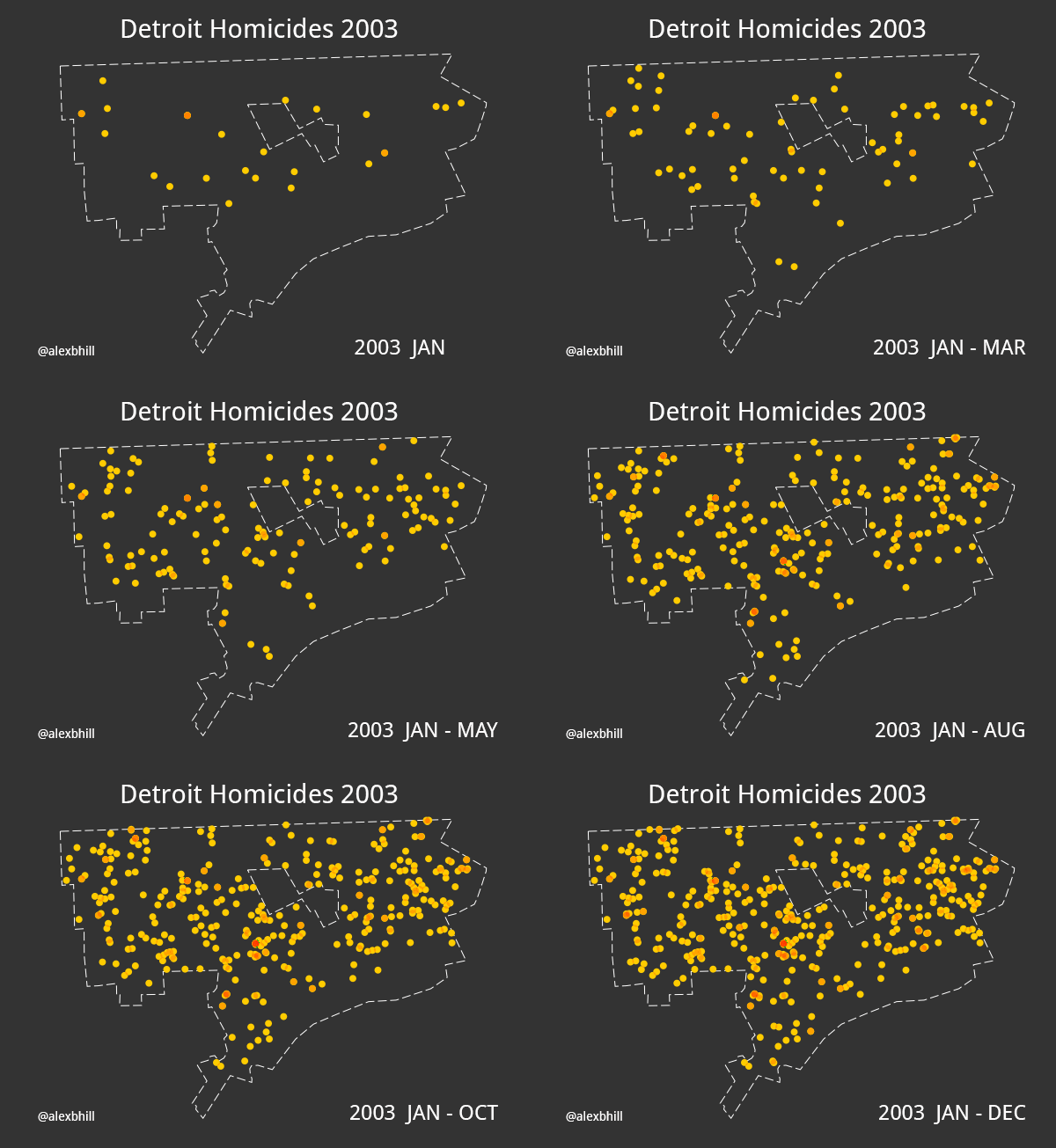
dethomicides2003This is a preliminary analysis to better understand the pattern of homicides in Detroit as part of a decade long view (2003 – 2013). Critical research and innovative programs have called for utilizing public health and epidemiological approaches to homicide and violence prevention (Cure Violence). The Detroit Youth Violence Prevention (DYVP) initiative reports that 87 percent of the 1,200 Detroit high school students surveyed said a family member or friend had been shot, murdered or disabled as a result of violence in the previous 12 months. The Detroit News has a long 2010 article on the effects of gun violence on children that is definitely worth a read.

It appears that homicides in 2003 follow a disease diffusion model where there are a few focal points that spread out into the rest of the city while continuing to be hot spots throughout the year. In 2003, 366 people were murdered with July being the worst month followed by August and September.

Detroit has reported early success with the ShotSpotter technology that helps triangulate gunshots and sends officers into communities to talk with neighbors.

The decade long analysis is in the works. Read more: Homicide, Gun Violence, and Epidemiology in Detroit

detroitdata_get

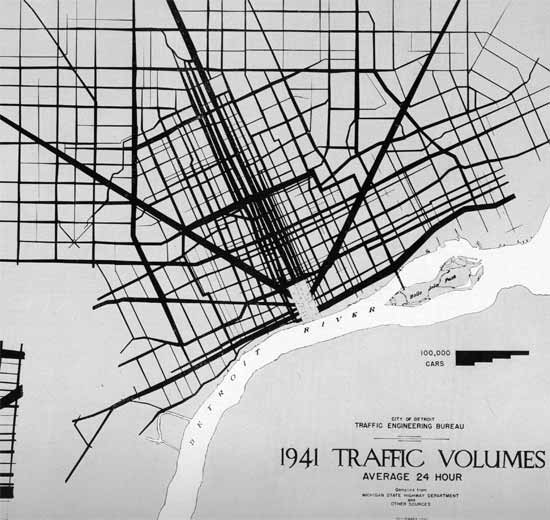
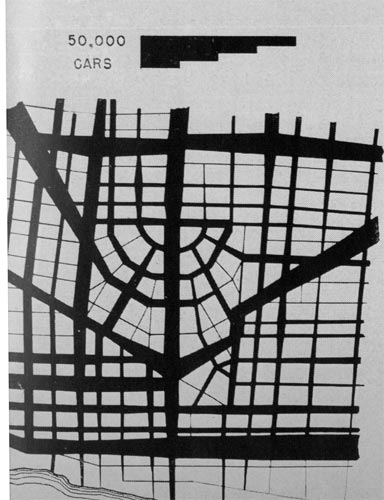
Map: Detroit 1941 Traffic Volumes

det-traffic-1941

Detroit used to have major traffic congestion Downtown:

The arterial vehicular traffic jams in Detroit can be cleared only by breaking the bottlenecks in the heart of the city where the greatest volume occurs. Traffic studies clearly show that a large percentage of traffic proceeds between its origin and destination on illogical routes. The crow-foot avenues, the confused tangle of the old city, the rectangular pattern of the newer developments, the network of railroads, the absence of breaks in topography through which arteries might have been built behind the growth of the city, the monotonous flatness downtown which prompted the solid building with no open spaces between developments, the relation of business and industry to the waterfront; all these contribute to the circuitous travel necessary to reach most points by automobile. The streets of Detroit are wider than those in most cities hut they arc not wide enough in the right places and cannot he stretched enough at most throats of congestion to meet the increasing traffic loads. The greatest barriers to convenient and safe automobile travel are the automobiles themselves which were built faster than the streets were modernized to accommodate them.

det-traffic-1941-downtown

These maps and the traffic analyses led to the emphasis on expressway development as opposed to regional and rapid transit. The unfortunate conclusion from these analyses were:

With no natural open spaces to follow, the new expressways must be located largely through solid development. It is fortunate that the general pattern of traffic flow coincides with belts of depressed property cheap enough to acquire for wide traffic arteries.

The areas of “depressed property” being referenced were the majority Black areas of Detroit, most notably Hastings Street, Paradise Valley.


Map: Vegetation Change and Social Stress in Detroit 1990

detroit-vegetation-stressThis map comes from Solstice: An Electronic Journal of Geography and Mathematics (Volume VII, Number 1, 1996) at the University of Michigan. Authors John Nystuen, Rhonda Ryznar, and Thomas Wagner.

Figure 6. In Figure 6, census tracts with the largest increase in 
greenness are shown with the darkest green and brown tones.  Superimposed 
on this colored pattern are census tracts of high social stress 
(cross-hatched).  High social stress census tracts are defined as those 
tracts with decrease in population greater than 25% between 1980 and 1990 
and with more than 50% of children below the poverty level.  There 
is substantial correspondence between the two patterns.