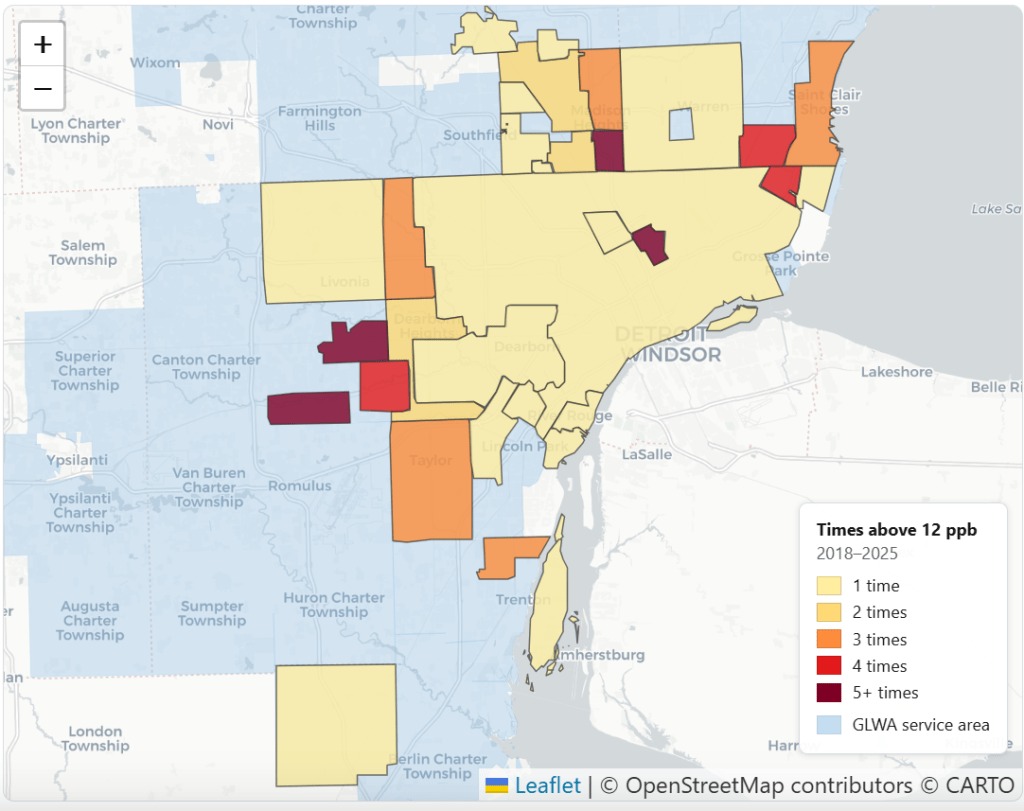
Aging infrastructure has become a persistent problem. The concern with lead water service lines has been highlighted after the Flint Water Crisis where the water source switch and proper treatment and corrosion controls were ignored. The Detroit water system, now a regional entity known as the Great Lakes Water Authority (GLWA), commissioned a report in 2024 to better understand the issue of lead in water samples across its service area and improve water treatment to reduce lead in tap water. Twenty-five metro Detroit communities have had lead levels exceed Michigan’s rule since 2018. Efforts remain active to remove all lead service lines. Planet Detroit reported on the issue and shared more about their mapping:
Each community is a public water system that purchases finished drinking water from GLWA. Lead in tap water typically comes from lead service lines and household plumbing. GLWA is required to treat water to control corrosion to minimize the amount of lead that dissolves in drinking water. Michigan’s lead and copper rule revisions lowered the action level from the federal 15 ppb to 12 ppb in 2025; readings shown are the 90th-percentile result of each compliance sampling round, with all rounds above 12 ppb between 2018 and 2025 included. One Hamtramck reading from 2018 used the older first-draw sampling protocol; all other readings used Michigan’s stricter fifth-liter protocol.

