by: Pat Sier
With Mayor Duggan’s split value land tax proposal currently stalled in the state legislature, both advocates and opponents have raised questions about what the plan would mean in practice for Detroit taxpayers.
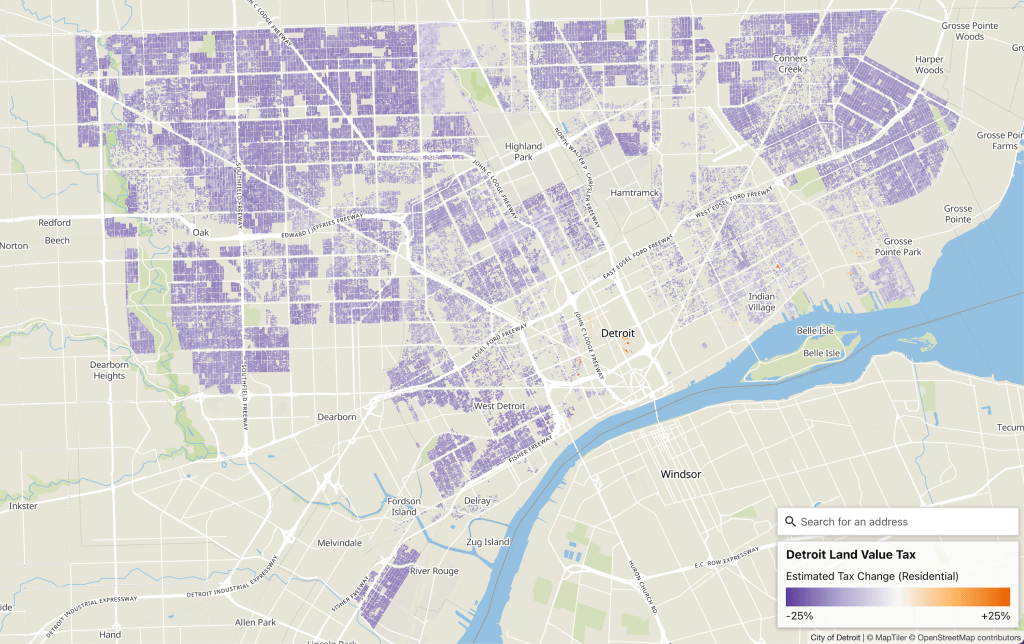
At a recent charter-mandated meeting, the mayor’s office previewed a tool for anyone to receive an estimate of how property taxes for their address would change under the proposal. The data behind it is available on a public city server and was used to create this map of estimated property tax changes.
The current data includes estimates of what residential parcels would have seen on their 2023 tax bill under the proposed plan, but makes it possible to see trends across the city, with the majority expected to receive at least some reduction in taxes. Vacant parcels on average would see a slight property tax increase with improved properties seeing a decrease according to the estimates, with downtown parcels seeing the steepest increases with or without improvements.
When zoomed out, some parcels may be combined with others nearby with their average percentage change estimate used to determine their color.
The code used to pull the data and the data itself are available on the project’s GitHub repository.
Pat Sier is a software engineer working in civic tech. Previously he worked at the journalism nonprofit City Bureau in Chicago.
 DETROITography
This map could spark discussions on urban development, community engagement, and equitable tax policies. Detroit has the potential for a remarkable transformation, and this map is a crucial step toward that. Looking forward to more initiatives that empower citizens and foster a sense of shared responsibility for our city’s growth. Keep up the fantastic work!
Pingback: Mapped: How Detroit land value tax would change residential taxes