
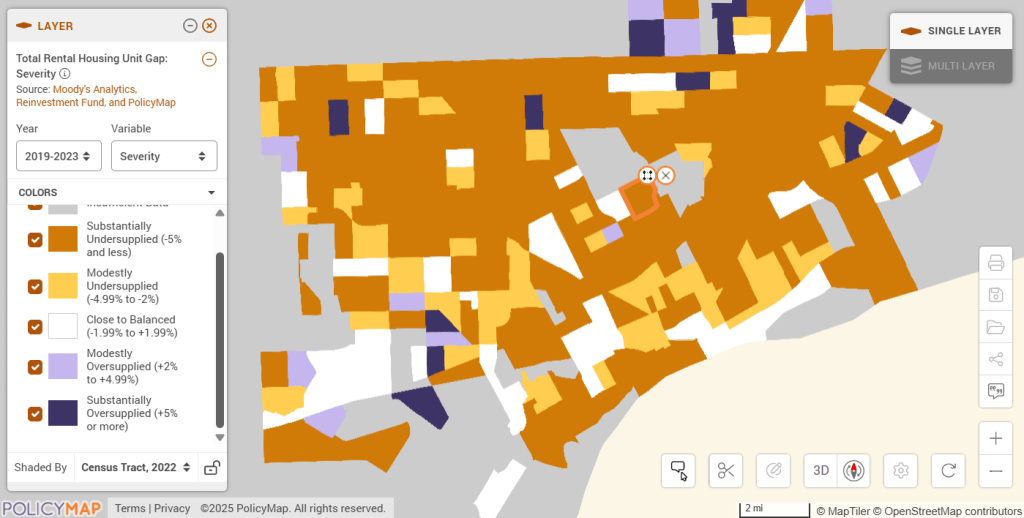
Moody’s may have increase Detroit’s credit rating over the years, but Moody’s Analytics still recognizes the difficulties and gaps in serving Detroiters. Rental housing in Detroit in particular is an on-going discussion with efforts to finance “affordable housing,” renovate formerly vacant homes, and improve quality of property management while at the same time reducing requirements on landlords.
The rental housing gap as defined by Moody’s is:
The total number of renter housing units below or above expectation is the difference between the current number of renter vacant units in a census tract and the expected number of renter vacant units in a “normal” market.
Citywide, nearly all Census Tracts are considered to be a “substantially undersupplied.” Big data caveat here is what Moody’s considers to be a “normal market” because Detroit has the furthest thing from a normal housing market and I couldn’t even predict when that might start to change. Still today, there exists the possibility of purchasing a home for $1,000 as well as a Downtown condo for over $1 million. The abnormal housing market data also needs to be paired with the fact that most Detroit households are housing burdened, where they are spending 30% of their income on their housing needs.
 DETROITography