by: Andrew Chiles, Wayne State University (Intro to GIS, Fall 2024)
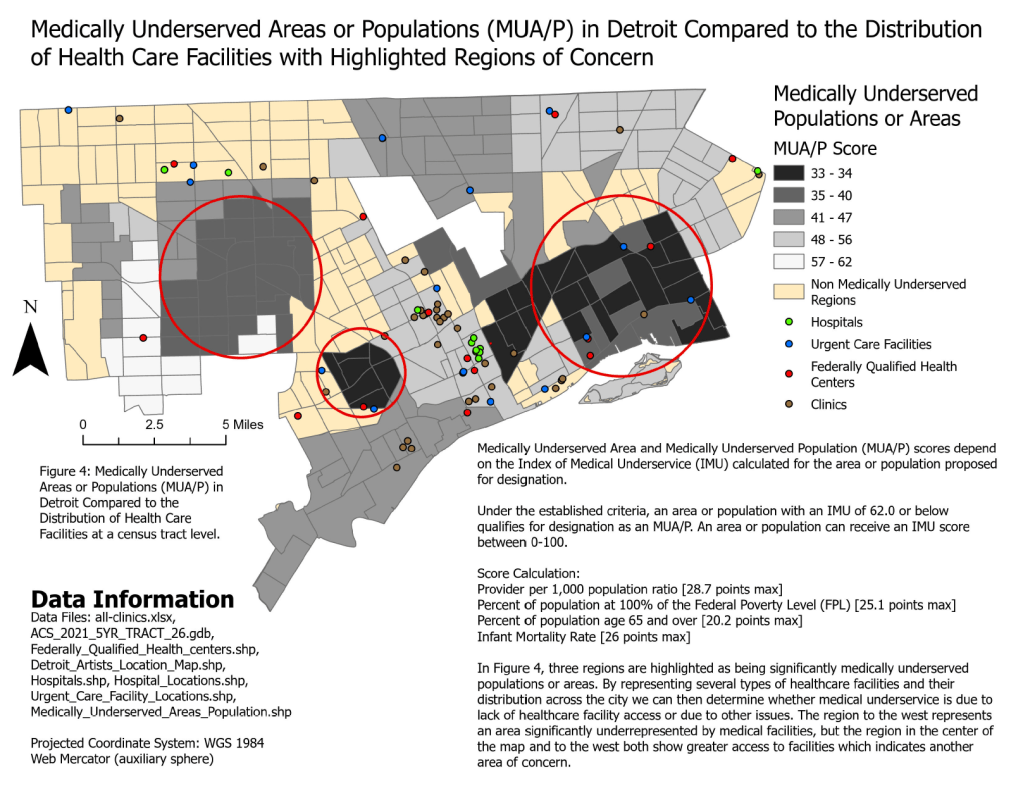
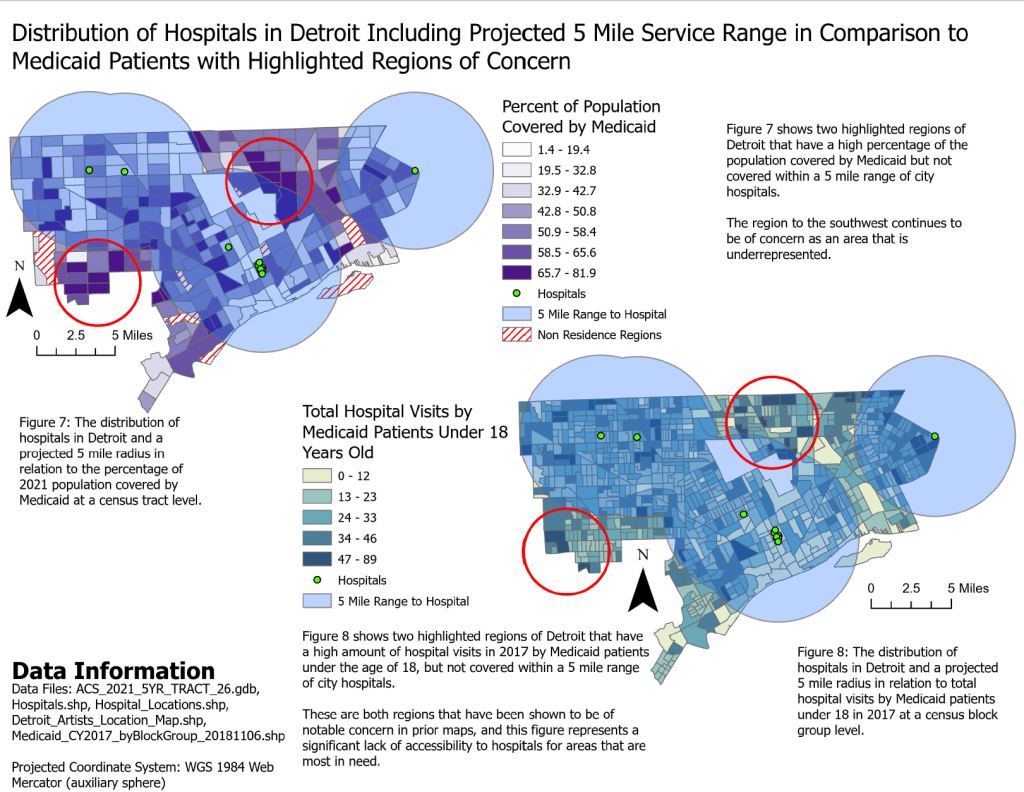
Access to healthcare is a crucial aspect of public health outcomes, even more so in urban areas such as Detroit, where socioeconomic disparities can influence who receives adequate medical care. This project will focus on examining access to healthcare facilities across Detroit, through the use of geospatial data analysis. Specifically, I would be seeking to answer how the spatial distribution of healthcare facilities in Detroit corresponds to varying demographic dynamics within the city, and what gaps exist in terms of healthcare accessibility.
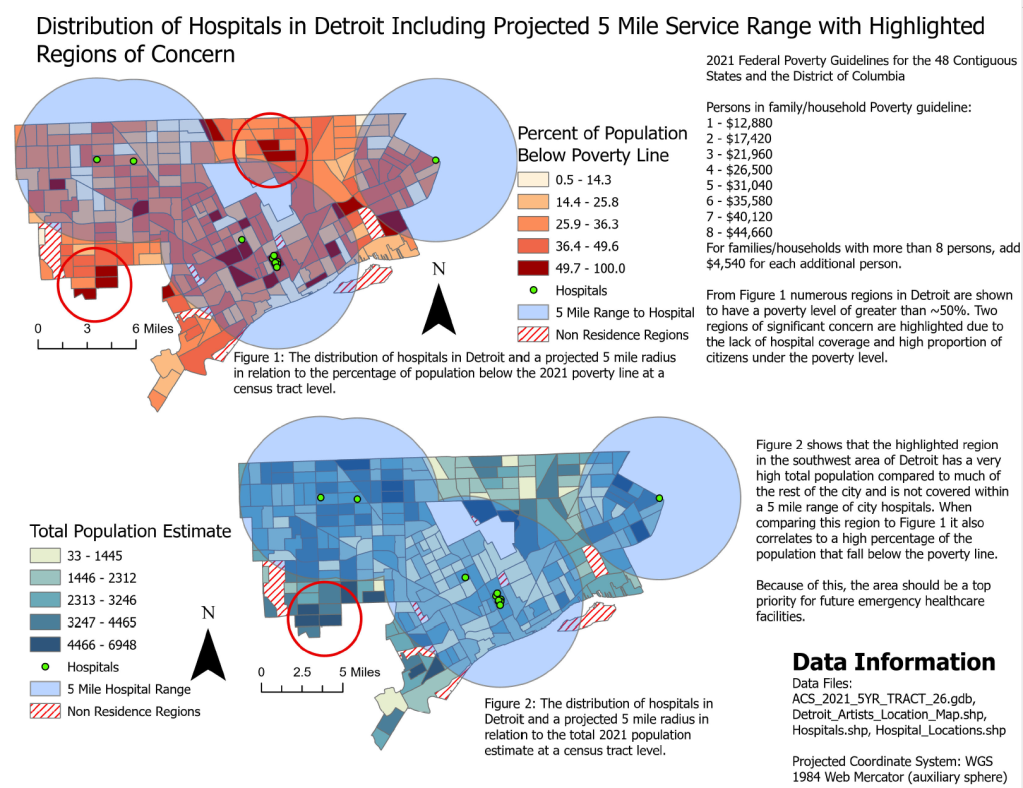
By examining the geographic placement of hospitals, clinics, and other healthcare facilities in Detroit and overlying the data with population metrics and health outcomes, we can identify areas that are underserved by healthcare services and/or disproportionately affected by preventable or manageable diseases and health issues.
This topic is significant in regard to discussions on health equity and urban health disparities. Detroit has been deeply affected by systemic racism in the past and continues to have the lingering effects. This research may help to showcase how it is rooted within public health. The results of which can inform public health initiatives aimed at improving healthcare accessibility and reducing illness prevalence in vulnerable communities.
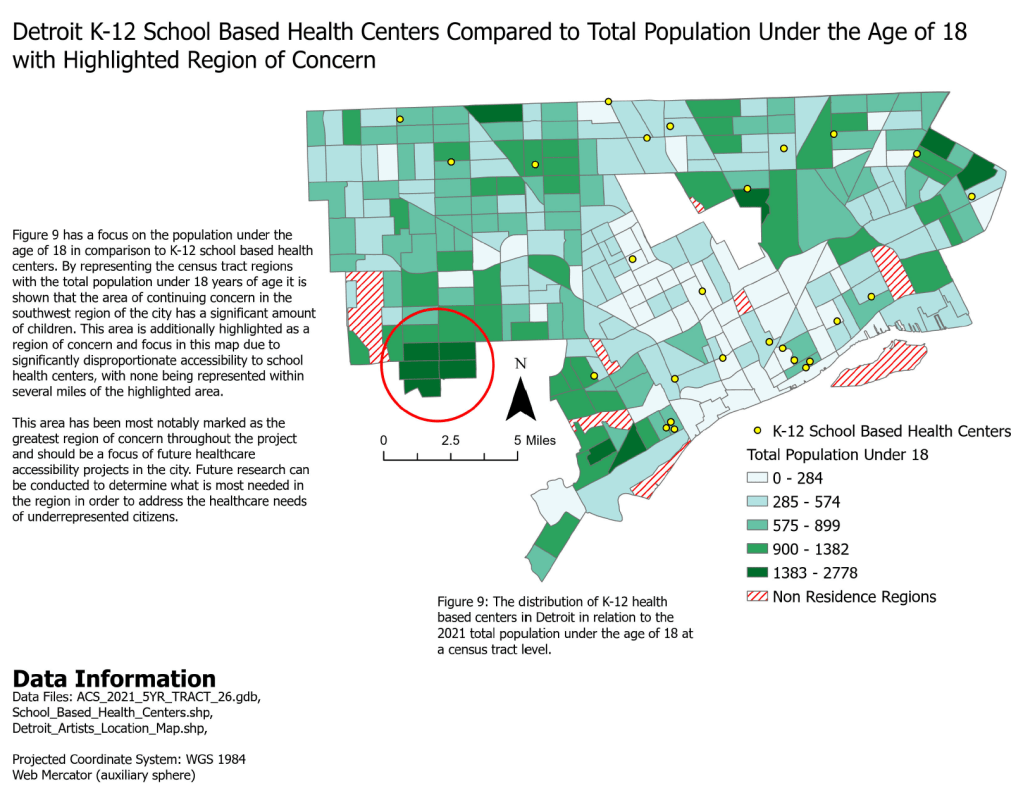
The geographic focus of the project is the entire city of Detroit, with a detailed analysis at the neighborhood or census-tract level. Detroit is characterized by it’s extremely diverse neighborhoods and communities, many have been shaped by historical patterns of disparities and economic disadvantages. By focusing on the entire city, we are able to capture the spatial variations in healthcare access and diseases to explore how they differ across different parts of the city. Neighborhoods of specific interest or concern will be highlighted and focused on to showcase these disparities across the city.
The data used in the project is from DetroitData and Data Driven Detroit (D3), catalogues of opensource data for the Detroit community, as well as the 2021 TIGER/Line Demographic and Economic Data and 2020 TIGER/Line zip code tabulation areas from the US Census Bureau. Additional reference material comes from the US Department of Health and Human Services – Office of the Assistant Secretary for Planning and Evaluation (ASPE) and the Health Resources & Services Administration (HRSA).
 DETROITography